News

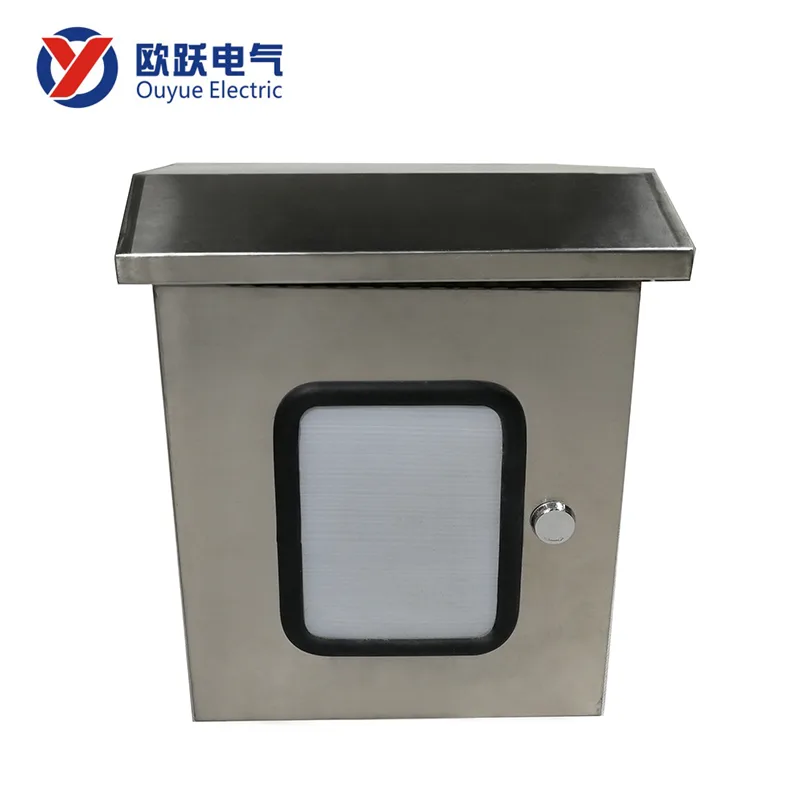
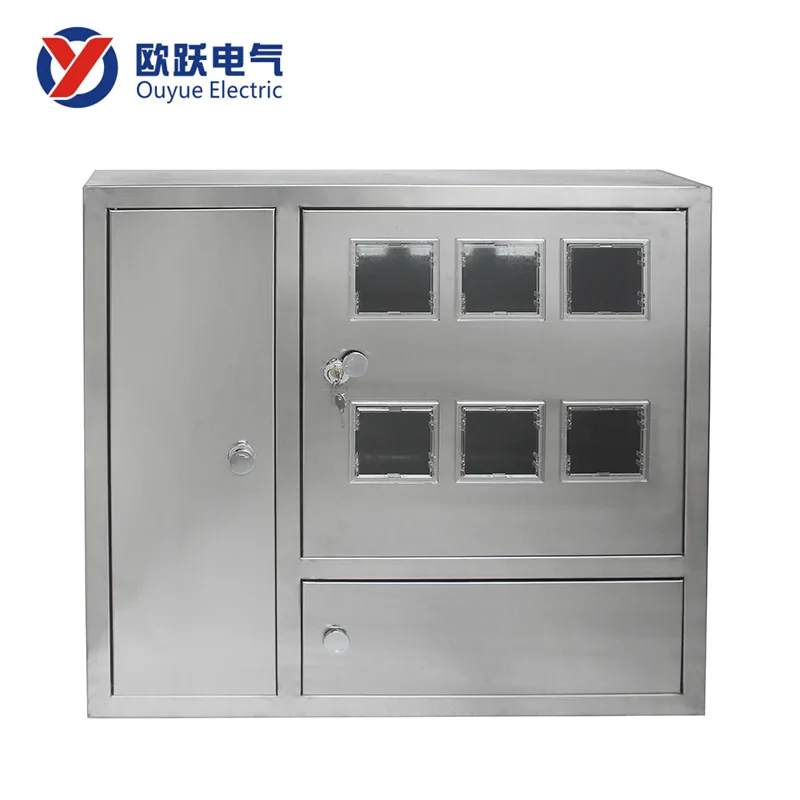
Wharf shore power matching: In high salt spray and high humidity environments, where is the anti-corrosion limit of stainless steel distribution boxes?

2026-05-29 0 Leave me a message

I. Why is a dedicated distribution box needed for shore power at the wharf?

The electrification of global ports is accelerating. According to data from the International Maritime Organization (IMO), more than 140 ports worldwide have deployed shore power facilities. However, the environment at the wharf is indeed very harsh for the metal containers.

The salt spray concentration is 50 to 100 times that of inland areas: the crashing of waves and the blowing of sea breeze fill the air with tiny salt-containing water droplets. The ISO 9223 standard defines coastal areas as C4-C5 grade corrosive environments. However, due to their direct proximity to the sea, the actual corrosion grade of wharf berths often reaches the highest CX grade.

Periodic high humidity and splashing caused by tides: When the tide rises, the sea level rises, and the bottom of the box may be splashed by seawater or even temporarily submerged. After the tide goes out, the remaining salt crystallizes on the surface, further corroding.

The exhaust gas from industrial ships is superimposed: The diesel engine exhaust from berthing ships contains sulfur dioxide and nitrogen oxides. When combined with sea salt, it forms acidic salt spray, which is far more corrosive than the ordinary Marine atmosphere.

In such an environment, even if traditional iron distribution boxes have undergone powder coating treatment, problems such as rusting and bubbling, bottom rusting through, and hinge rusting and seizing often occur within 12 to 18 months.

The terminal operator has to frequently replace the containers, which not only increases the operation and maintenance costs but also affects the continuous availability of the shore power system. The shutdown of shore power means that the vessels berthing can only start auxiliary engines for power generation, directly contrary to the original intention of emission reduction.

II. The essential difference between 316L and 304: Why must the materials of shore power at docks be upgraded?

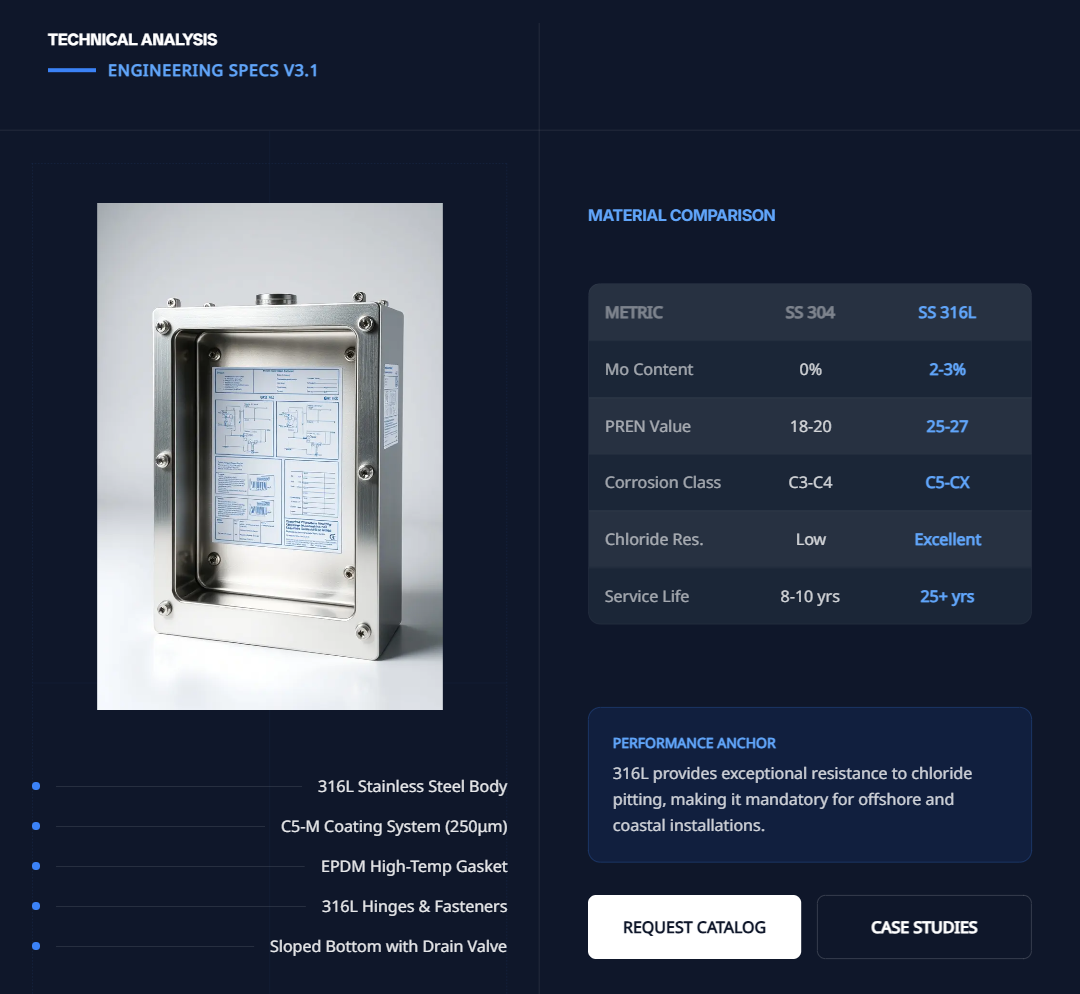
Many purchasers ask: 304 stainless steel distribution boxes perform well in general outdoor scenarios. Why do they need to be upgraded when they reach the wharf? The answer lies in the chemical composition of two types of stainless steel:

Comparison dimension 304 stainless steel 316L stainless steel
Chromium (Cr) content 18-20% 16-18%
Nickel (Ni) content 8-10.5% 10-14%
Molybdenum (Mo) content NONE 2-3%
Carbon (C) content ≤0.08% ≤0.03%
Applicable corrosion grade C3-C4 (Urban/Light Industry/General Coastal) C5-CX (Heavy Industry/Marine/Tidal Zone)

Molybdenum is the key: The 2-3% molybdenum added to 316L can significantly enhance the stability of the passivation film on the surface of stainless steel, making it less likely to be punctured under the erosion of chloride ions - this is precisely the core basis for the selection of 316L by shore power at docks.

Industry research shows that the pitting corrosion equivalent (PREN value) of 316L stainless steel in chloride-containing environments reaches 25-27, which is more than 35% higher than the 18-20 of 304 stainless steel.

III. C5-M Heavy-duty Anti-corrosion Coating: Adding Another Layer of "Insurance" to the Surface of Stainless steel

There is a common misunderstanding in the industry: Stainless steel is already corrosion-resistant, so why do we still need to apply coating? In fact, in a CX-level wharf environment, even 316L stainless steel, when exposed to strong acidic salt spray and seawater splashing for a long time, may experience pitting corrosion and crevice corrosion on its surface.

Applying a C5-M heavy-duty anti-corrosion coating on the surface of 316L to form a dual protection of "stainless steel substrate + coating isolation" is the industry's best practice for achieving a maintenance-free life of over 15 years.

For the shore power scenarios at docks, Ouyue Electric adopts the following coating processes:

Coating level Materials and Processes Function
Surface pretreatment Stainless steel special sandblasting, roughness Ra 7-10μm Remove the oxide layer and enhance the adhesion of the primer
Primer layer Epoxy zinc-rich primer, dry film thickness 60-80μm Cathodic protection + chemical bonding to isolate chloride ions
Intermediate paint layer Epoxy mica intermediate paint, with a dry film thickness of 80-100μm Enhance shielding performance to prevent the penetration of water vapor and oxygen
Topcoat layer Aliphatic polyurethane topcoat, dry film thickness 50-70μm Uv-resistant, acid and salt spray resistant, and customizable in color
Total dry film thickness 200-250μm Meet the ISO 12944 C5-M high durability standard

IV. Structural anti-corrosion details: Three key parts that are easily overlooked

Detail One: Treatment of weld seams


Even if 316L low-carbon stainless steel is used, the weld surface may still develop a weak chromium-poor zone due to welding oxidation. Ouyue Electric performs two post-welding treatment processes: Firstly, it acid washes and passivates the weld seam to remove welding slag and oxide color, and restore the surface passivation film. Then carry out local sandblasting and touch-up painting to ensure that the anti-corrosion grade of the weld area is consistent with that of the base material.

Detail Two: The material matching of the hinge and the fastener

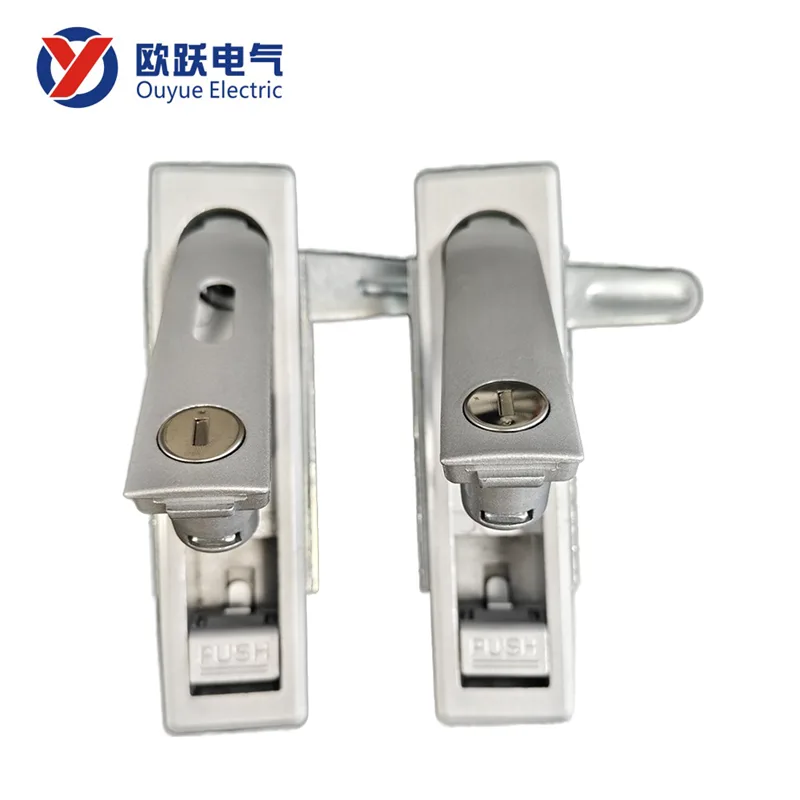
Using 304 material hinges or bolts on all 316L containers is a common "cutting corners" trap in wharf projects. Galvanic corrosion occurs between different materials in a salt spray environment - 304 pieces act as anodes to accelerate corrosion, eventually leading to the rusting of hinges or the breakage of bolts. Ouyue Electric insists that all box bodies, hinges, locks and fasteners are made of 316L stainless steel to eliminate the risk of galvanic corrosion.

Detail Three: The "anti-water accumulation" design of the bottom structure

If seawater splashes and condensate accumulate at the bottom of the tank, it will cause long-term crevice corrosion. We adopt the following three designs:


  • The bottom is designed with a V-shaped slope structure to ensure that water converges towards the drainage holes under the effect of gravity.
  • Equipped with a 316L stainless steel drain plug, it can be cleaned regularly.
  • All bottom welds are continuous full welds to prevent the gaps formed by spot welding from becoming the origin of corrosion.

V. Start your customized quay shore power project with blueprints


Whether you are involved in the shore power transformation of domestic coastal ports or providing power distribution facilities for port projects in Southeast Asia, the Middle East, and Europe, Ouyue Electric can offer a full range of customized services, from material selection (316L/304), C5-M coating to CE/IP65 certification support.

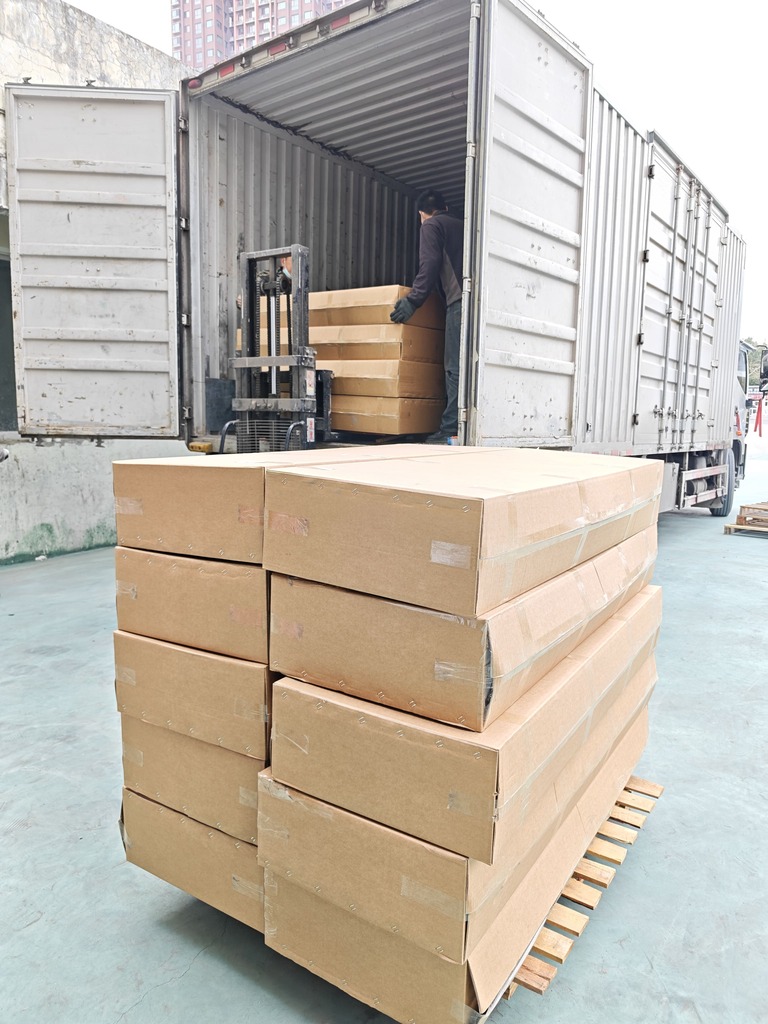
It only takes 7 days to produce the finished product after the product drawings are confirmed. Welcome to send your technical requirements or box specifications for the wharf project. We will provide you with a complete solution including anti-corrosion grade assessment, material recommendation and rapid sample scheduling. With stainless steel distribution boxes that can withstand salt spray tests, we will safeguard the stable operation of your shore power equipment.


Related News
Leave me a message
X
We use cookies to offer you a better browsing experience, analyze site traffic and personalize content. By using this site, you agree to our use of cookies. Privacy Policy
Reject Accept