In 2026, the policies for the electric vehicle industry chain in many Southeast Asian countries have entered a substantive promotion stage, and the charging infrastructure is moving from pilot projects to large-scale deployment.
Thailand: As a major automotive manufacturing hub in Southeast Asia, Thailand has set the "30·30" target - by 2030, the production of electric vehicles will account for 30% of the total vehicle production. According to the plan of the National Electric Vehicle Policy Committee of Thailand, the target for public fast-charging piles in 2026 is over 2,000, and the number of AC slow-charging piles that come with them is even larger. The government's provision of subsidies for the installation of charging piles and tax reductions for enterprises has attracted a large number of Chinese charging pile operators and manufacturers to enter.
Indonesia: As the largest economy in Southeast Asia, Indonesia has extended its nickel ore resource advantages downstream and is fully committed to building an industrial chain for electric vehicle batteries and vehicle manufacturing. Public charging facilities in major cities such as Jakarta, Bandung and Bali are being deployed intensively. In 2026, the Ministry of Energy of Indonesia requires that at least one fast charging station be installed every 50 kilometers along major expressways, directly driving the demand for outdoor charging pile distribution boxes.
Vietnam: The rapid expansion of VinFast has driven the construction of local charging networks. The Vietnamese government has recently introduced policies to offer land rent reductions and credit incentives for investment in charging infrastructure. The construction of charging piles in core cities such as Hanoi and Ho Chi Minh City has significantly accelerated, and market demand is upgrading from battery swap cabinets for two-wheeled electric vehicles to charging piles for four-wheeled vehicles.
According to data from industry research institutions, the market size of charging infrastructure in Southeast Asia is expected to grow from approximately 500 million US dollars in 2024 to 2.5 billion US dollars in 2030, with an average annual compound growth rate of over 30%. For Chinese manufacturers of charging pile equipment and supporting box bodies, Southeast Asia is undoubtedly the most promising incremental market to watch at present.
The opportunities in the Southeast Asian market are clear, but the impact of climatic conditions on outdoor electrical equipment is often underestimated by new entrants to the market. Unlike temperate regions, the tropical monsoon climate and equatorial Marine climate in Southeast Asia pose a triple challenge to distribution boxes:
The average annual temperature in Southeast Asia is 27 to 35° C. Under the midday sun during the dry season, the surface temperature of the box can reach 70°C. In this environment, if the heat dissipation design of the box is insufficient, the internal temperature can easily exceed 60°C, far exceeding the optimal working range of 40-55°C for electrical components. Long-term high-temperature operation accelerates insulation aging and shortens the lifespan of components. What's more serious is that high temperatures trigger the derating protection of the charging module, significantly reducing the charging power and affecting the revenue of operators.
The annual rainfall in Southeast Asia ranges from 1,500 to 4,000 millimeters. It is common for there to be a short downpour every day during the rainy season. It not only tests the waterproof grade of the box body, but also its moisture-proof ability. High humidity environments can form condensation inside a sealed box, and water droplets adhering to the circuit boards can cause short circuits. How to achieve both waterproofing and dustproofing as well as ventilation and heat dissipation is the core design contradiction in tropical climates.
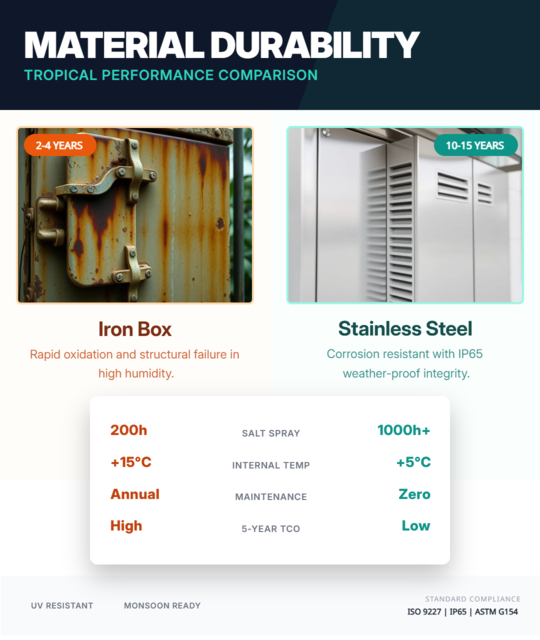
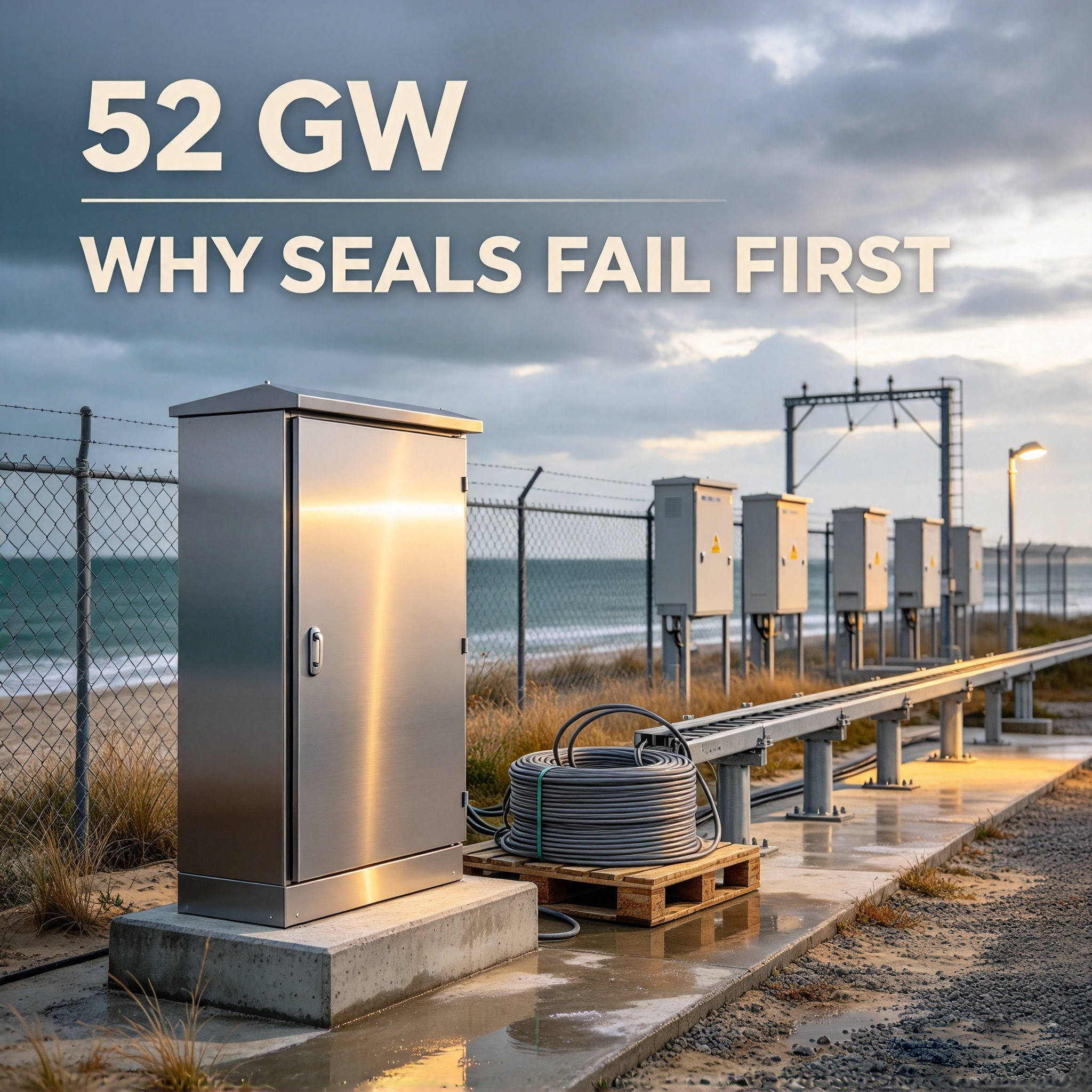
Most of the charging piles in Indonesia, southern Thailand, the coastal areas of Vietnam, the Philippines and other places are located within 10 kilometers of the coastline, and the salt spray content in the air is much higher than that in inland areas. After salt-containing water vapor seeps into the micro-pores of the coating or the sealing gaps, it causes electrochemical corrosion to the metal substrate. Under such conditions, the iron box shows structural rusting through within three years. The salt spray corrosion process is slow but irreversible. Once discovered, it often causes irreparable damage to the equipment.
Why can't traditional iron distribution boxes hold up in Southeast Asia? The answer lies in two aspects: materials and structure.
At the material level, cold-rolled steel plates rely on surface coatings to resist corrosion. Once the coating develops micro-cracks due to transportation bumps, installation operations, or long-term ultraviolet aging, the base material is exposed to high-humidity salt spray, and rust spreads outward from the damaged points of the coating, just like the "spread of cancer cells" that cannot be stopped.
At the structural level, under the influence of temperature differences and continuous high temperatures, the difference in the thermal expansion coefficients between the iron box body and the sealing strips causes the sealing surface to gradually fail. During the rainy season, rainwater seeps in through the door gaps, and during the dry season, dust accumulates and enters. The protective capacity decreases linearly over time.
The following is a set of data comparisons based on the actual working conditions in Southeast Asia:
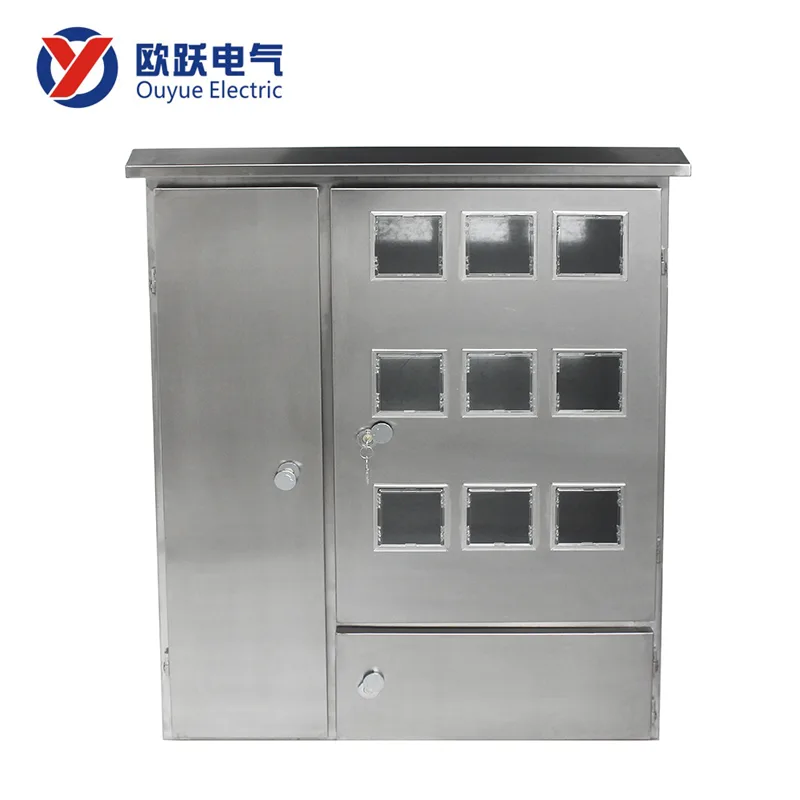
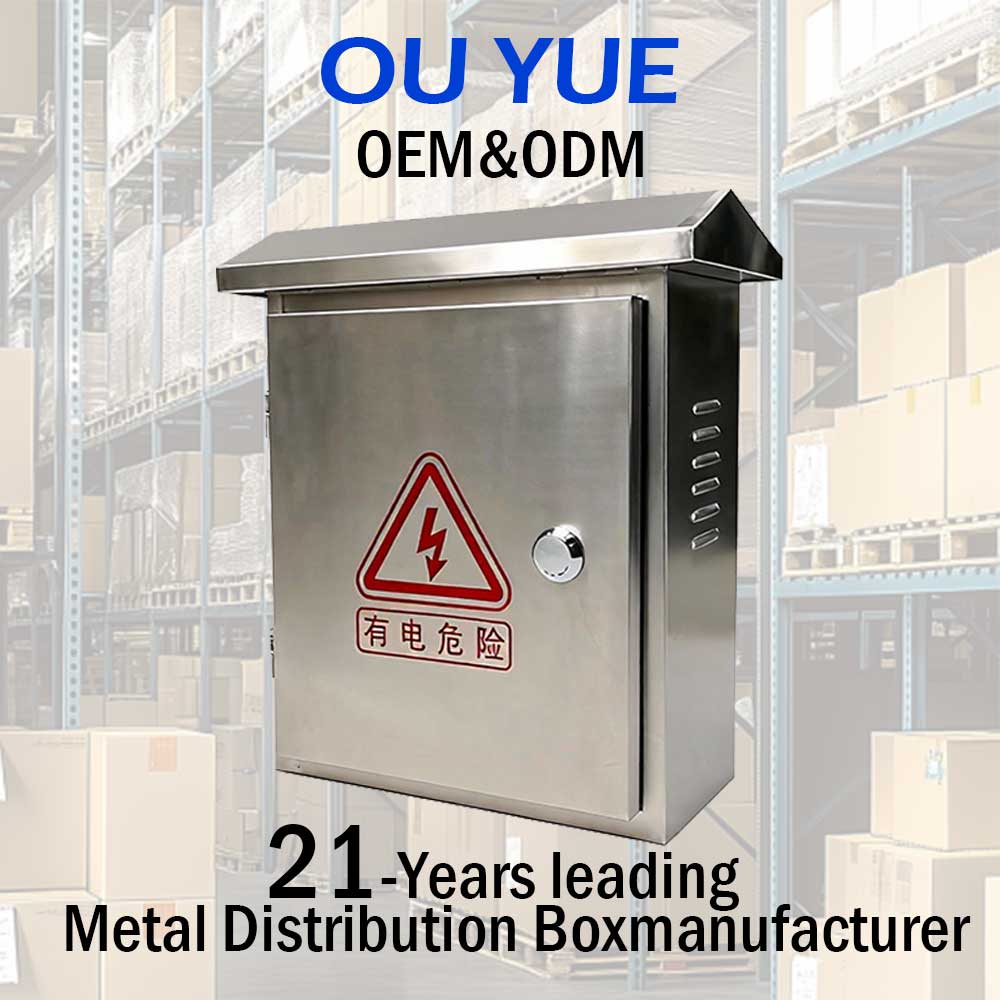
Based on a deep understanding of the working conditions of charging piles in Southeast Asia, Ouyue Electric has launched a customized stainless steel distribution box solution for tropical climates, systematically addressing the challenges of high temperature, high humidity and salt spray from four dimensions:
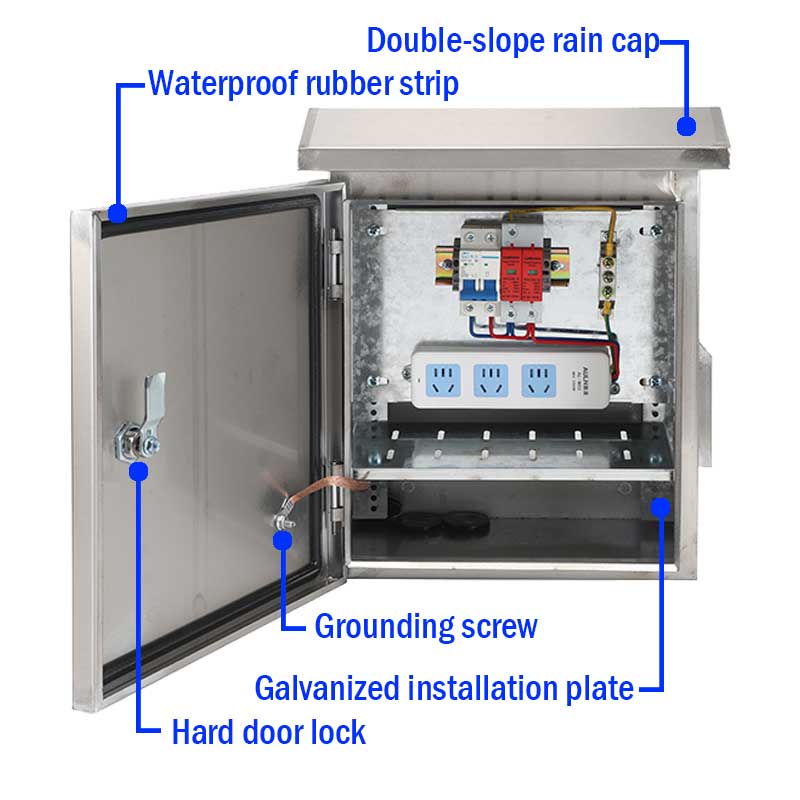
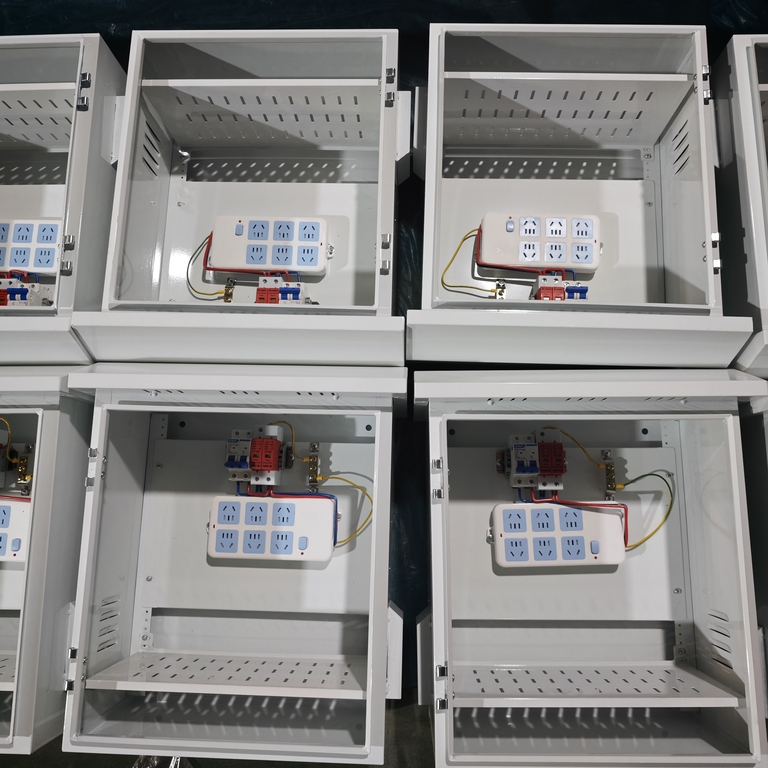
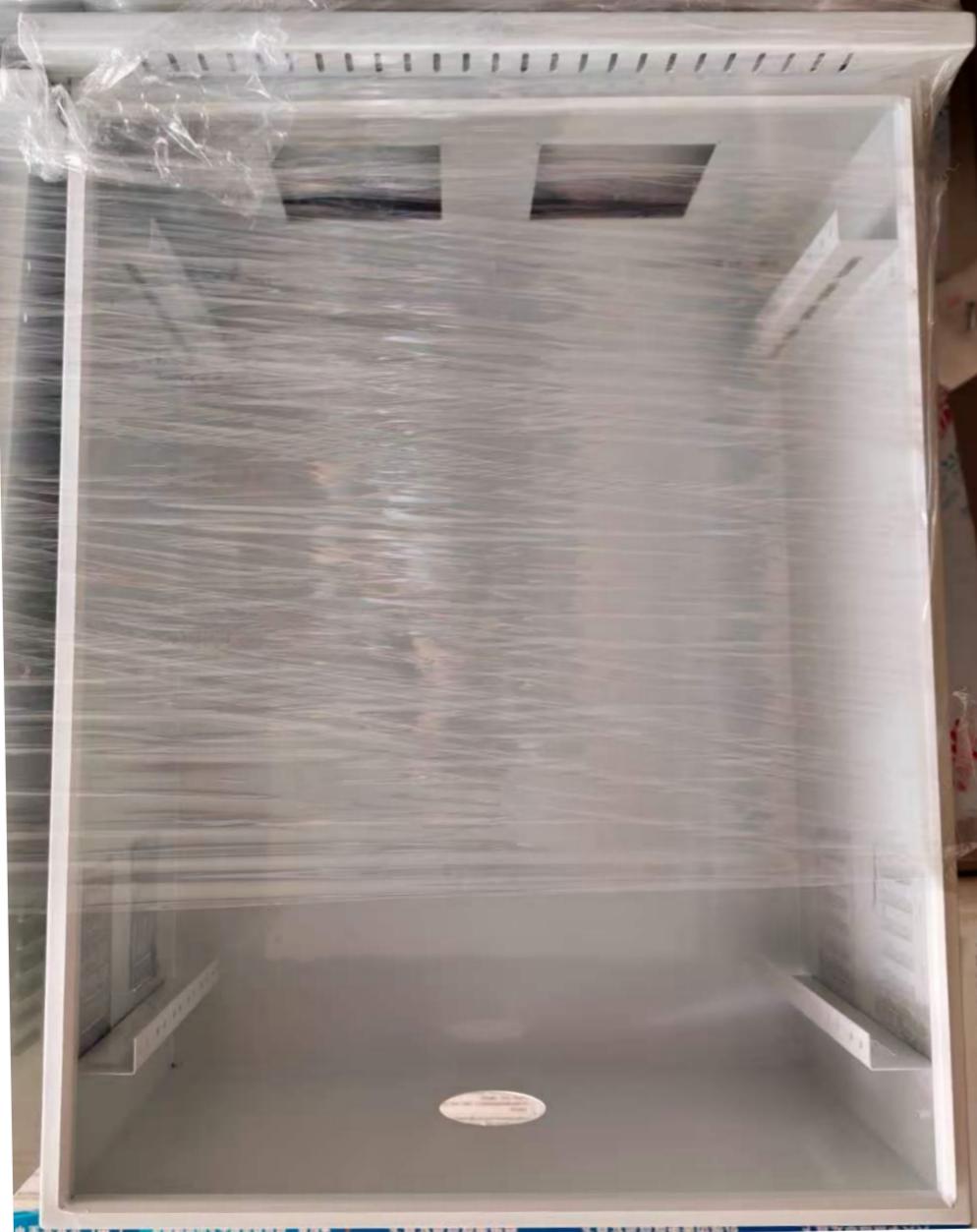
The box body adopts a passive convection design of "cold air intake from the bottom and hot air exhaust from the top". The area of the bottom air intake is calculated based on the full-load power matching, and the top air outlet is equipped with rainproof louvers to prevent rainwater from flowing back in. For the box body of fast-charging piles with a power of over 60kW, a temperature-controlled active fan can be optionally equipped. When the temperature inside the cabinet exceeds 40°C, it will automatically start forced exhaust to keep the temperature inside the box below the safety line of 50°C. This design enables continuous air exchange inside the box, preventing condensation from forming.
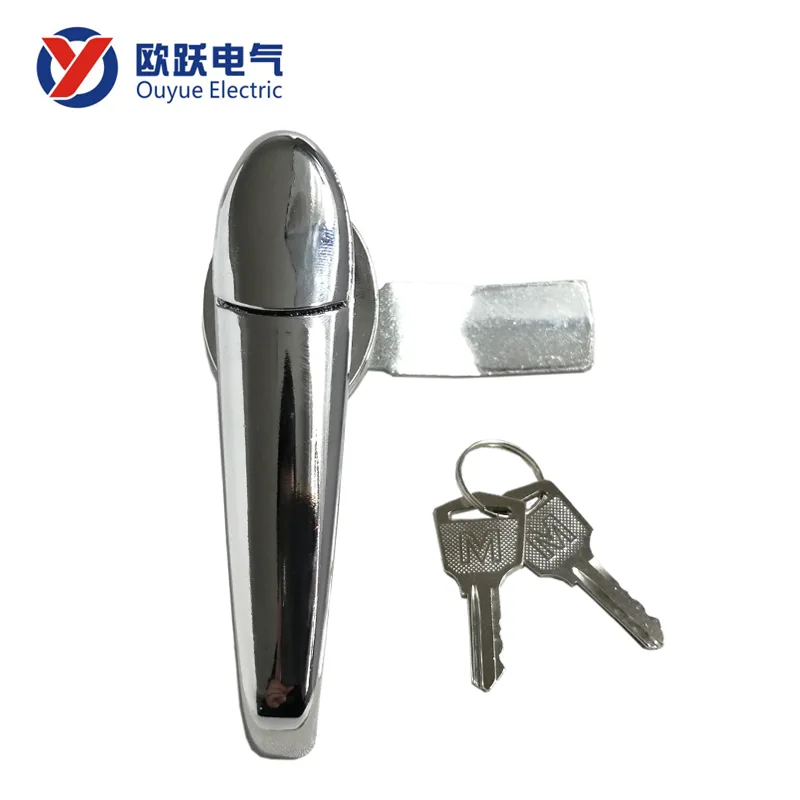
The door panel is embedded with closed-cell foamed EPDM sealing strips, which can withstand temperatures from -40°C to 120°C for a long time. They will not soften, stick together or undergo permanent compression deformation even in the high temperatures of Southeast Asia throughout the year. The cross-section of the sealing strip adopts a D-shaped design, with the compression amount controlled at 30% to 40%, taking into account both the sealing pressure and the elastic margin. When the box door is closed, the entire circle is sealed without any breaks, with a protection level reaching IP65, capable of withstanding direct short-term heavy rain spray.
304 stainless steel is selected as the base material for the box. The material itself contains 18-20% chromium and 8-10% nickel. A dense passivation film is naturally formed on the surface. Even if the coating is accidentally scratched, the base material will not rust. The surface is sprayed with outdoor-grade light-colored polyester powder to reflect sunlight and heat radiation. Under the same midday light conditions in Southeast Asia, the internal temperature of the light-colored stainless steel box is 8-12°C lower than that of the dark-colored iron box.
The product has passed the CE certification and IP65 protection level test. It complies with the international certification standards generally accepted in the Southeast Asian market and can assist customers in passing local project acceptance. The box body supports OEM/ODM customization. It can be designed and adapted one-to-one according to the size, installation hole position and heat dissipation air duct of different brand charging modules, and is compatible with mainstream charging pile brands on the market.
The golden window period for the charging pile market in Southeast Asia is currently underway. It only takes 7 days to produce the finished product after the product drawings are confirmed. Whether you are laying out a charging station project in Thailand, supporting the fast charging network on Indonesia's expressways, or developing localized charging pile products in Vietnam, Ouyue Electric can provide your equipment with stainless steel distribution boxes that can withstand the test of tropical climates with the response speed of a source factory and dedicated protection solutions for Southeast Asia.
Welcome to send your charging module specification sheet or box requirements. We will provide solution suggestions and sample scheduling as soon as possible.