News

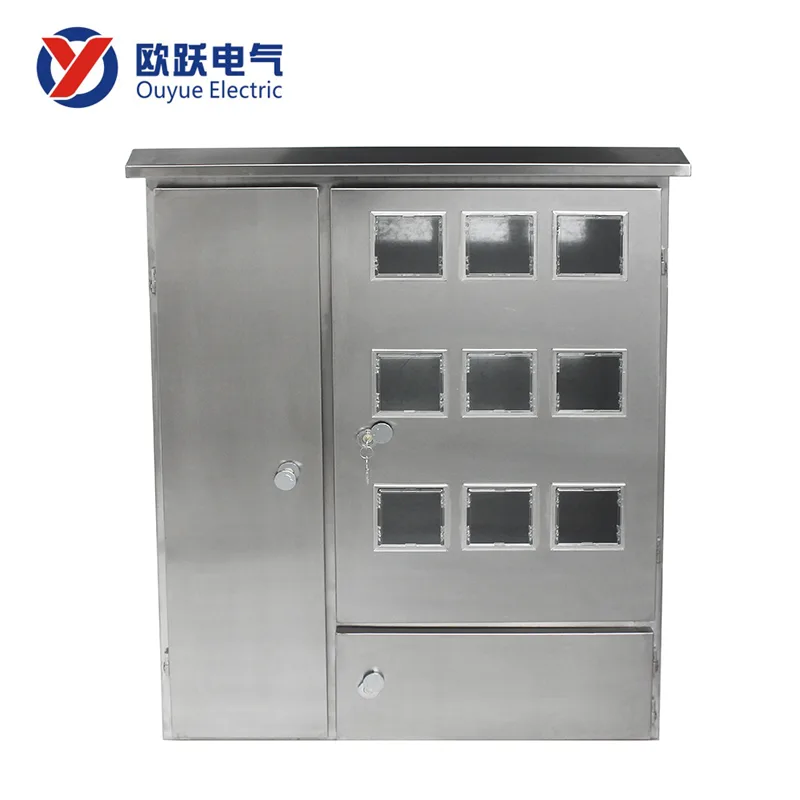
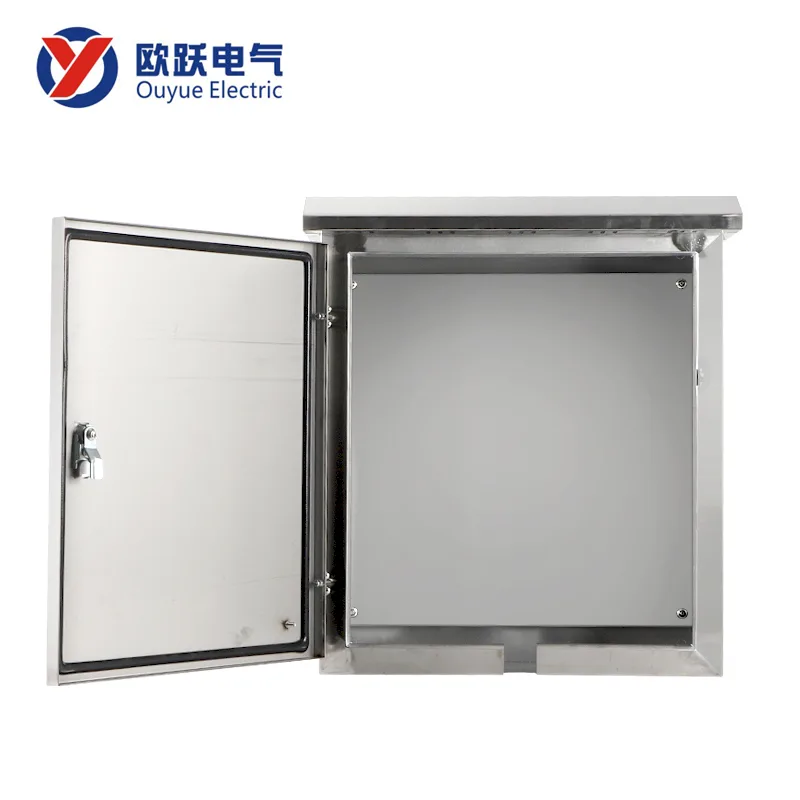
In 2026, the global extreme high temperature broke records. Why has the heat dissipation design of outdoor stainless steel distribution boxes become a hard requirement for procurement?

2026-08-07 0 Leave me a message

I. Under high temperatures, the internal temperature of the distribution box rises rapidly


Outdoor distribution boxes face a dual heat source when exposed to direct sunlight: external solar radiation conducts heat into the box through its surface, while internal components generate heat during operation. When ambient temperature reaches 45°C, the surface temperature of a dark-colored box under direct sunlight can reach 75–80°C. Combined with continuous operation of internal heat-generating components such as transformers, circuit breakers, and power supplies, the internal temperature of a fully sealed enclosure can easily exceed 65°C.

What does this temperature mean? Most industrial circuit breakers and contactors have a rated maximum operating temperature of 55–60°C. Exceeding this threshold doesn't immediately damage components, but it accelerates insulation aging, increases contact resistance, causes tripping characteristics to drift, and significantly shortens equipment lifespan. More seriously, high temperatures trigger derating protection in charging modules and inverters, forcing the equipment to reduce output power. For charging station operators, this means slower charging speeds and lower revenue; for factory power distribution systems, it could lead to production equipment shutdowns due to unstable power supply.

Power companies' procurement departments are responding. A major European grid operator has upgraded this summer from a recommended requirement to a mandatory one, stipulating that outdoor distribution enclosures must operate at full load for four hours at an ambient temperature of 40°C without exceeding a 25K internal temperature rise. In a recent tender for charging station distribution enclosures, a Middle Eastern EPC contractor explicitly required suppliers to submit test reports demonstrating internal temperature rise under 50°C ambient conditions, eliminating those who failed to provide such documentation. Procurement standards are shifting from "just functional" to "capable of full power operation even in high temperatures."

II. How does the stainless steel material itself participate in heat dissipation?


Before discussing heat dissipation design, it's important to clarify a common misconception: is stainless steel a poorer conductor of heat? In fact, the thermal conductivity of 304 stainless steel is about 16 W/(m·K), which is indeed lower than that of aluminum (approximately 200 W/(m·K)). However, the difference compared to cold-rolled steel plate (around 50 W/(m·K)) is not significant. For outdoor distribution enclosures, the key factors affecting internal temperature rise are not primarily the thermal conductivity of the enclosure material, but rather three broader design variables: the reflectivity of solar radiation, the efficiency of air convection inside and outside the enclosure, and the layout of internal heat-generating components along with their heat dissipation pathways.

The real contribution of stainless steel enclosures to heat dissipation lies in two aspects. First, stainless steel is non-combustible; under extreme temperatures, it does not soften, deform, or emit smoke like plastic enclosures, nor does it suffer accelerated chalking and peeling of coatings as iron-based enclosures do when exposed to high heat. Second, stainless steel allows for greater flexibility in coating options—light-colored stainless steel enclosures can be painted white, light gray, or bright silver, taking advantage of the high reflectivity of light surfaces to solar radiation, thereby reducing heat input at the source.

An often-overlooked fact is that in outdoor distribution enclosures, solar radiation typically contributes more to thermal load than internal component heat generation. Under direct midday summer sunlight, a dark gray surface can absorb 500–700W per square meter of solar radiation, whereas a light-colored surface can reduce this absorption by over 40%. This means that selecting the right paint color may yield more immediate results than installing fans.

III. Four heat dissipation design dimensions of outdoor distribution boxes


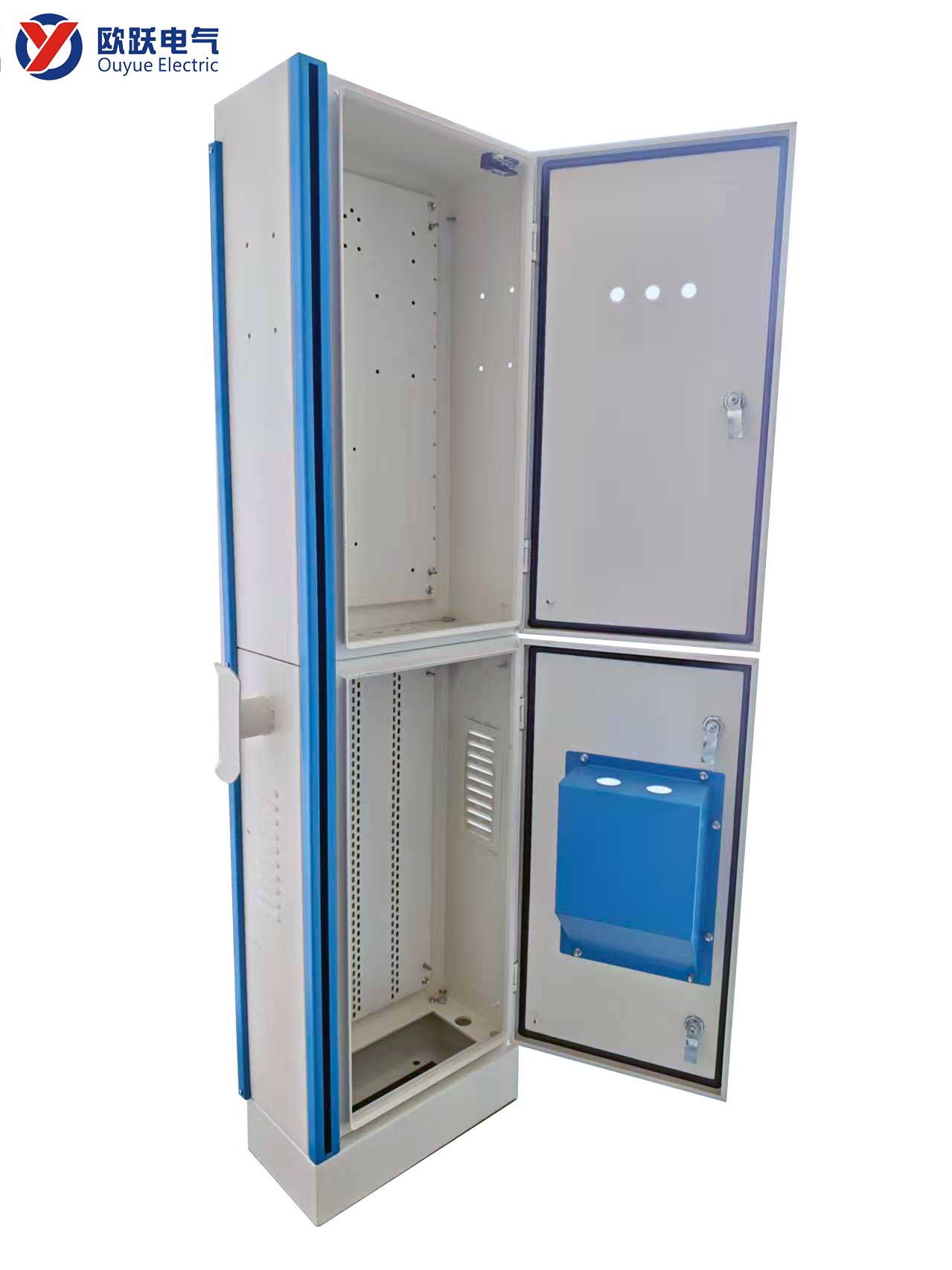
Heat dissipation is not the responsibility of a single component, but rather a systematic engineering approach that integrates cabinet structure, coating selection, ventilation design, and internal layout. Ouyue Electric develops heat dissipation solutions for outdoor stainless steel distribution cabinets across four key dimensions:

Light-colored Coating – Reducing Thermal Load at the Source  

The cabinet surface features an outdoor-grade electrostatic powder coating in light colors—such as gray-white or matte bright silver. Light-colored surfaces reflect 70–80% of visible sunlight and infrared radiation, compared to only 30–40% for dark coatings. Under equivalent solar exposure, the surface temperature of a light-colored stainless steel cabinet can be 10–15°C lower than that of a dark iron cabinet, resulting in a corresponding internal temperature rise reduction of 6–10°C. The coating itself uses weather-resistant polyester powder, ensuring no chalking or fading over long-term use in UV-intensive regions, thus maintaining high reflectivity.

Natural Convection Air Pathways – Energy-Free Base Cooling  

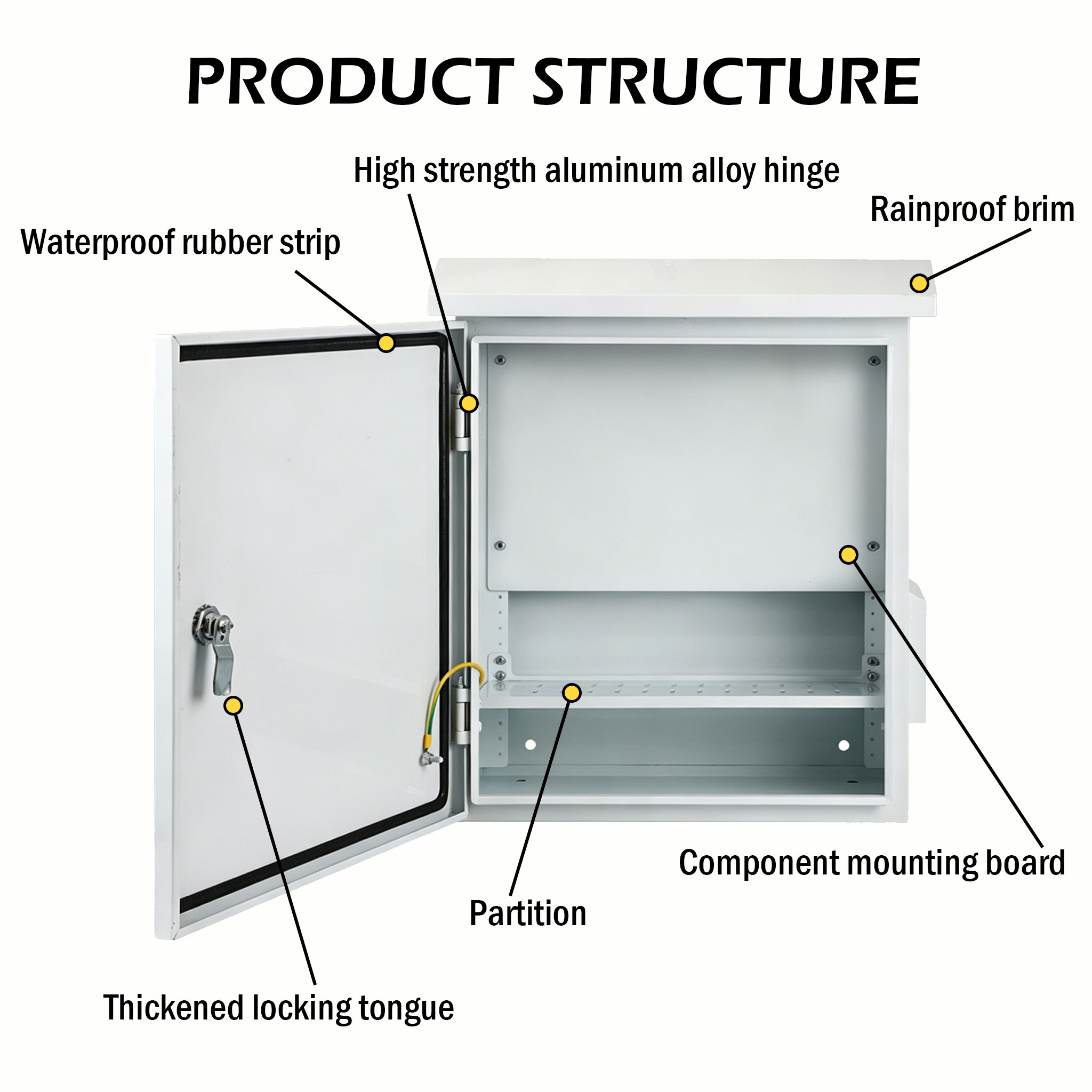
The cabinet design employs a passive convection layout with "cold air intake from the bottom and hot air exhaust from the top." Intake vents are positioned at the base or beneath side panels, while exhaust vents are located at the top or above side panels. Leveraging the physical principle that warm air rises due to its lower density, continuous air exchange occurs without requiring fans. The intake area is calculated based on the internal heat load, while the exhaust vents feature downward-sloping rain-deflecting louvers that maintain sufficient airflow cross-section while preventing water ingress. For monitoring or communication cabinets with heat generation below 100W, pure passive convection typically suffices to keep temperature rise within acceptable limits.

Active Cooling Upgrade – Designed for High-Power Equipment  

When high-heat-generating equipment such as transformers, high-power charging modules, or inverters is installed inside the cabinet, passive convection alone may be insufficient. Ouyue Electric reserves standardized fan mounting interfaces on the top or side panels, allowing customers to select and install thermostatically controlled axial fans according to actual heat output. Fans operate automatically via temperature sensors: when internal temperature exceeds a preset threshold (typically 35–40°C), the fan activates to force air out; once temperatures return to safe levels, the fan shuts off, minimizing dust intake and reducing fan power consumption. The fan interface flange dimensions are standardized, enabling easy upgrades or replacements later.

Internal Layout Optimization – Positioning Heat-Generating Components Strategically  

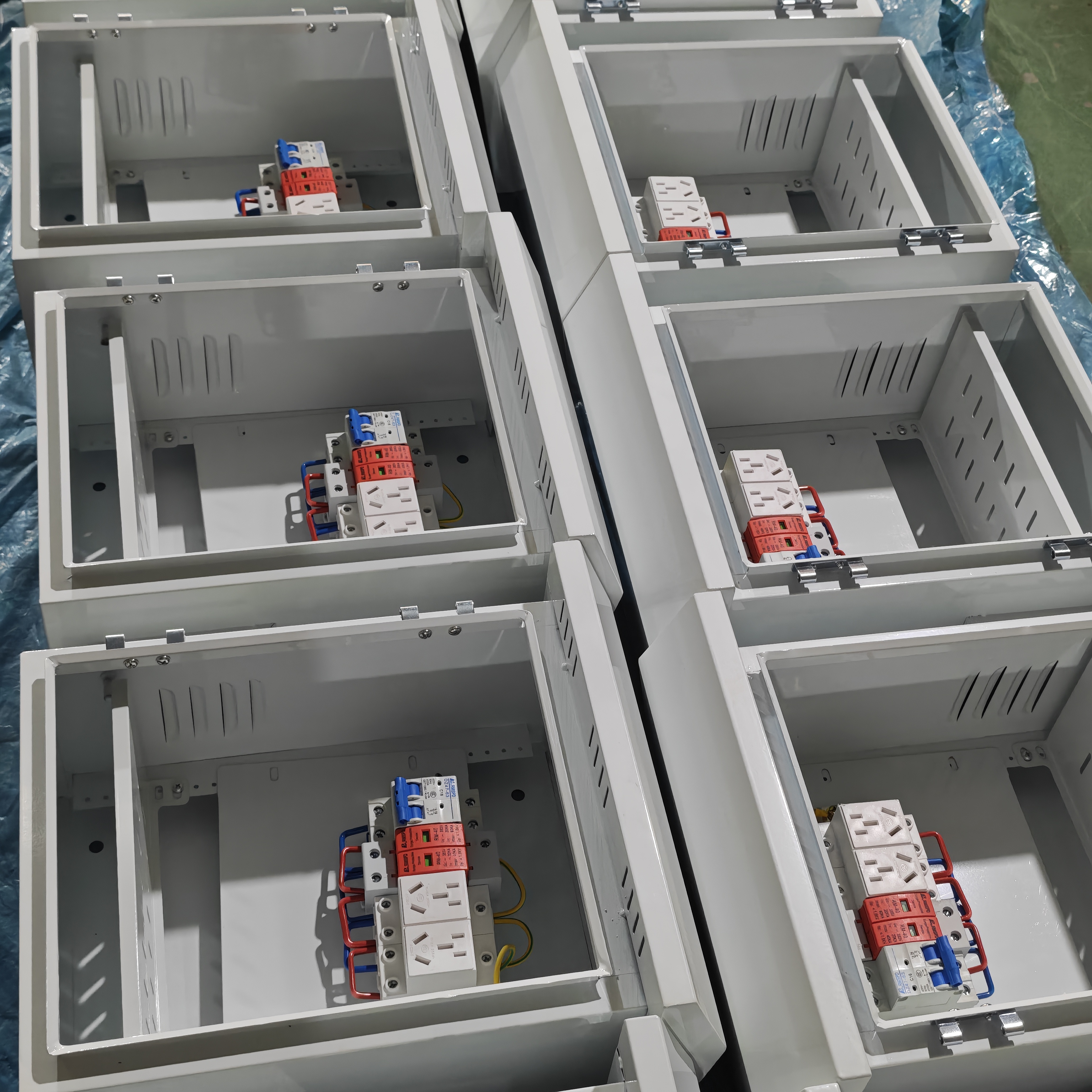
The final dimension of thermal design lies within the cabinet interior. High-heat components (e.g., transformers, high-power switching power supplies) should be placed along the main convective path near the exhaust vents, allowing heat to escape via the shortest possible route. Temperature-sensitive components (e.g., controllers, communication modules) should be located on the cold-air side near the intake or within separate compartments. A 15–20mm gap between mounting plates and the rear panel creates a backside airflow channel, preventing heat buildup behind the mounting boards. These layout principles are systematically applied in Ouyue Electric’s custom designs, tailored precisely to each customer’s component list.

IV. Extreme high temperatures are reshaping overseas procurement standards


The impact of this round of global extreme heat will extend far beyond the summer itself. Power regulators and major EPC contractors in multiple countries are initiating revisions to temperature tolerance standards for outdoor electrical equipment. Three key signals deserve attention:

The National Electrical Manufacturers Association (NEMA) is considering adding an appendix to NEMA 250 standard that includes cabinet temperature rise testing under high-temperature conditions; several Middle Eastern countries have already included "verification of full-load operation at ambient temperatures up to 50°C" as a qualification criterion in their large-scale infrastructure project tenders scheduled for the second half of 2026; and a power company in Southeast Asia has, for the first time, required suppliers in its distribution automation tender to provide a simulation report on internal temperature distribution within outdoor enclosures under direct sunlight.

These signals point to a single trend: over the next three to five years, global procurement standards for outdoor switchgear will shift from merely requiring compliance with IP protection ratings to demanding both IP protection and high-temperature thermal dissipation performance. During this transition window, suppliers who first establish robust high-temperature thermal design capabilities will gain a competitive edge in procurement.

V. Ouyue will enter the global outdoor electrical market with stainless steel distribution boxes that can withstand high temperatures


Ouyue Electric has always specialized in custom manufacturing of metal distribution boxes and switchgear. From light-colored coatings that reflect solar radiation to structural designs incorporating convective air ducts, and from passive heat dissipation to flexible configurations with active forced cooling, every stainless steel distribution box exported undergoes design considerations for thermal performance under high-temperature conditions right from the manufacturing stage.

Once product drawings are confirmed, production can be completed within just seven days. Whether you're working on outdoor electrical projects in the Middle East, Southern Europe, or Southeast Asia, feel free to send us your technical requirements or installation environment parameters—we will provide a complete customized solution, including heat dissipation recommendations, along with sample scheduling.


Related News
Leave me a message
X
We use cookies to offer you a better browsing experience, analyze site traffic and personalize content. By using this site, you agree to our use of cookies.Privacy Policy
RejectAccept