Saudi Arabia and the United Arab Emirates are promoting energy transformation at an unprecedented speed, and the Middle East is becoming a "golden market" for Chinese power equipment to go global. According to industry exhibition data, Saudi Arabia plans to invest 100 billion US dollars in renewable energy production by 2030, with the goal of increasing the proportion of renewable energy to 50% by 2030.
The United Arab Emirates plans to significantly increase the proportion of clean energy by 2030 and invest over 60 billion US dollars in the construction and upgrading of power infrastructure over the next five years.
Two super projects have become the core engines of the photovoltaic boom in the Middle East. One is the NEOM (Future New City) green hydrogen project in Saudi Arabia. This project builds a 2.2GW photovoltaic power station, a 1.65GW wind farm and a 400MWh battery energy storage system. It is the world's largest green hydrogen project.
The other one is the Mohammed bin Rashid Solar Park in Dubai. As the world's largest single solar park, its sixth phase of 1,800MW is about to be put into operation, and the seventh phase of 2,000MW photovoltaic with 1,400MW energy storage system has initiated the bidding process. The total planned installed capacity is 7,260MW, with an investment of 13.6 billion US dollars.
In this round of construction boom, a clear procurement signal deserves attention: When EPC general contractors in Saudi Arabia and the United Arab Emirates are selecting equipment suppliers, sand-proof distribution cabinets and outdoor stainless steel box bodies are listed as demand hotspots, and they are required to have a protection level of IP55 or above and be verified for operation in an environment of 50℃.
Ordinary stainless steel or iron distribution boxes operate well in temperate regions. However, once placed in the deserts of the Middle East, they immediately face two fatal challenges:
In desert areas, the annual number of sand and dust days exceeds 100, and the sand particles carried have a particle size ranging from 0.1 to 0.5mm, which is sufficient to penetrate ordinary sealed structures.
After sand and dust enter the box, they accumulate on the surface of the circuit board, posing a risk of short circuit. Adhering to the surface of the heat sink reduces the heat dissipation efficiency by more than 30%. Long-term wear and tear can also cause the sealing strip to crack, creating a vicious cycle.
In the extreme high temperatures of summer in the Middle East, the surface temperature of the box can reach 75-80°C under direct sunlight. If the heat dissipation design of the box is insufficient, the internal temperature can easily exceed 60°C, far exceeding the optimal working range of 40-55°C for most electrical components. Under high-temperature baking, ordinary rubber sealing strips age and harden at an accelerated rate, and the electrostatic powder coating gradually loses its luster and powderizes.
The protective ability of the box body disintegrates over time. What is more serious is that the temperature difference between day and night can reach 30°C. Due to the difference in the coefficient of thermal expansion, stress is generated between the metal box body and the internal components. After long-term repetition, it may lead to weld cracking and bolt loosening.
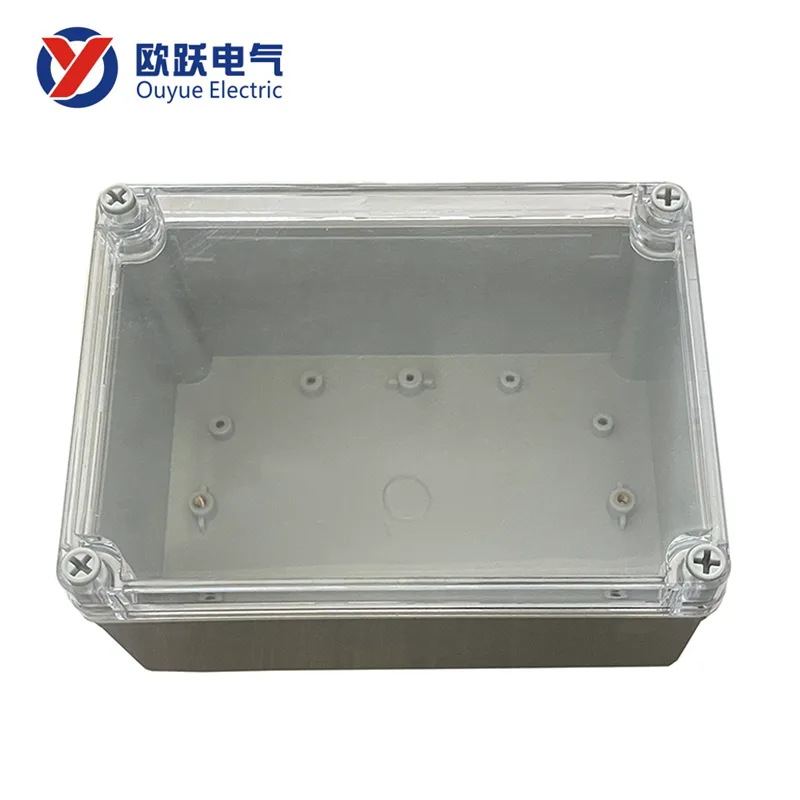
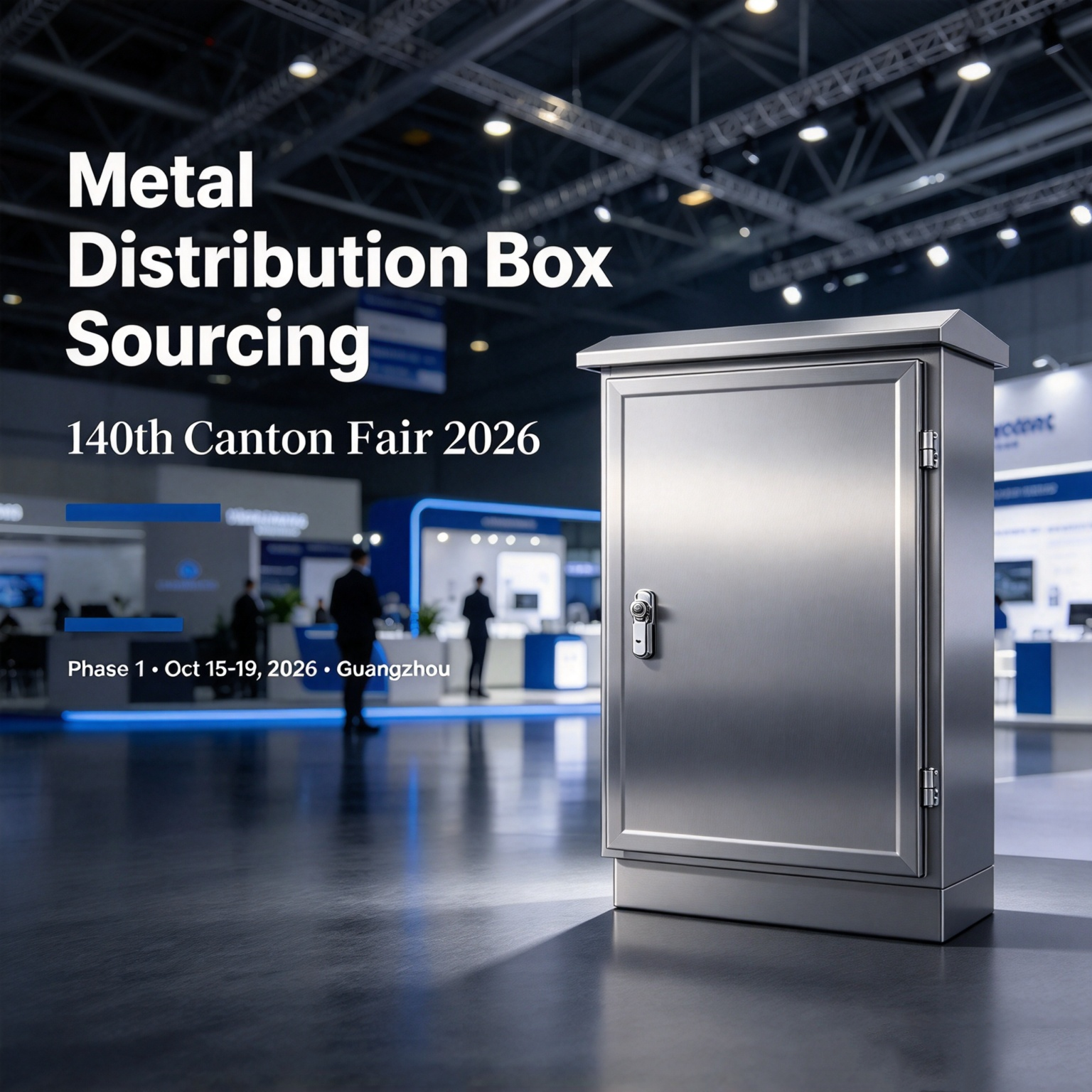
In response to the special demands of the Middle East market, Ouyue Electric has developed a complete customized solution for desert-level stainless steel distribution boxes from five dimensions: protection, heat insulation, sealing, coating, and testing.
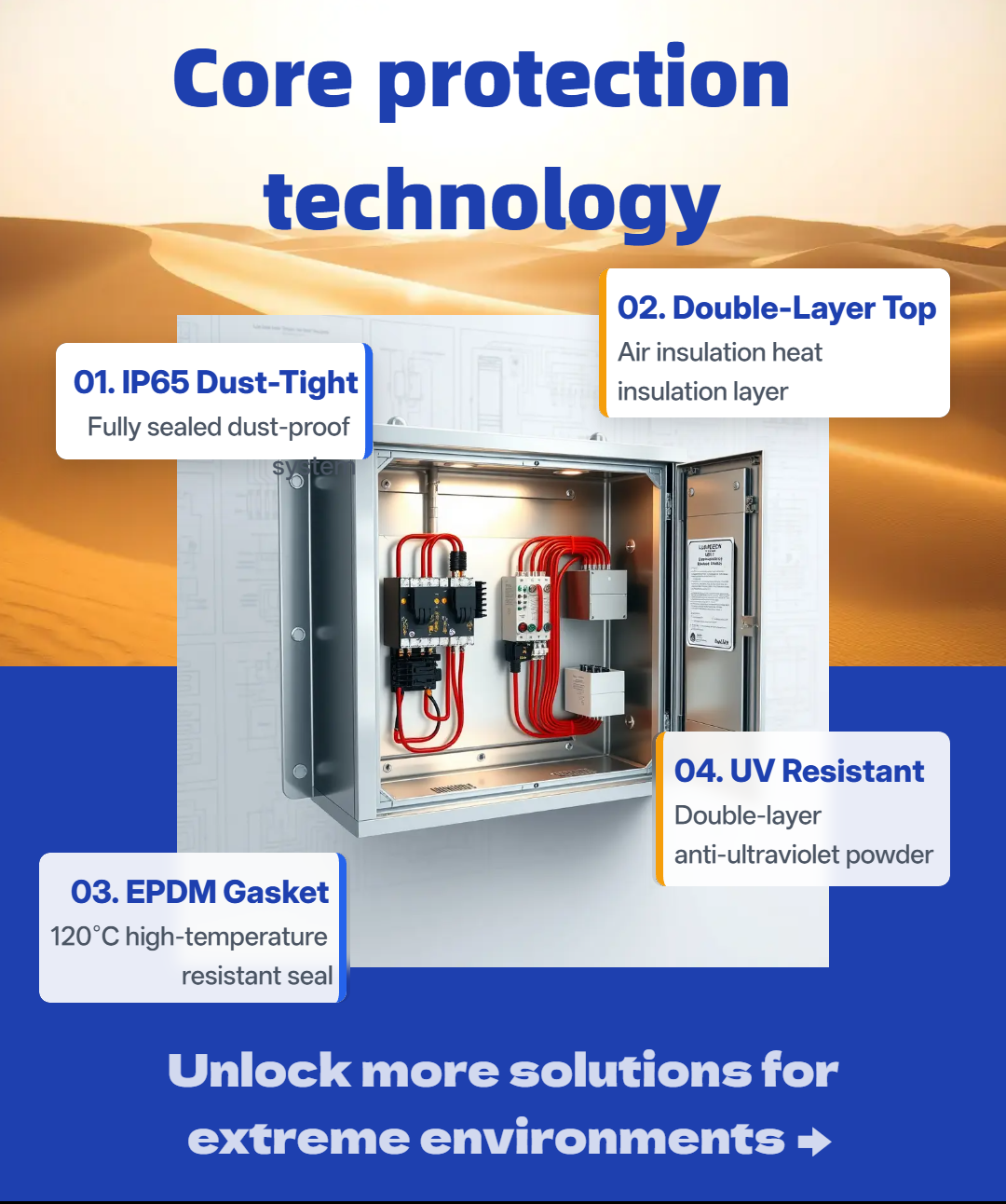
The photovoltaic project in the Middle East requires protection of IP55 or above, while Ouyue Electric directly benchmarks against the IP65 standard. According to IEC 60529, IP6X stands for complete dust tightness - the box is placed in a sand and dust box under negative pressure for testing. After opening the cover for inspection, no dust should enter the interior.
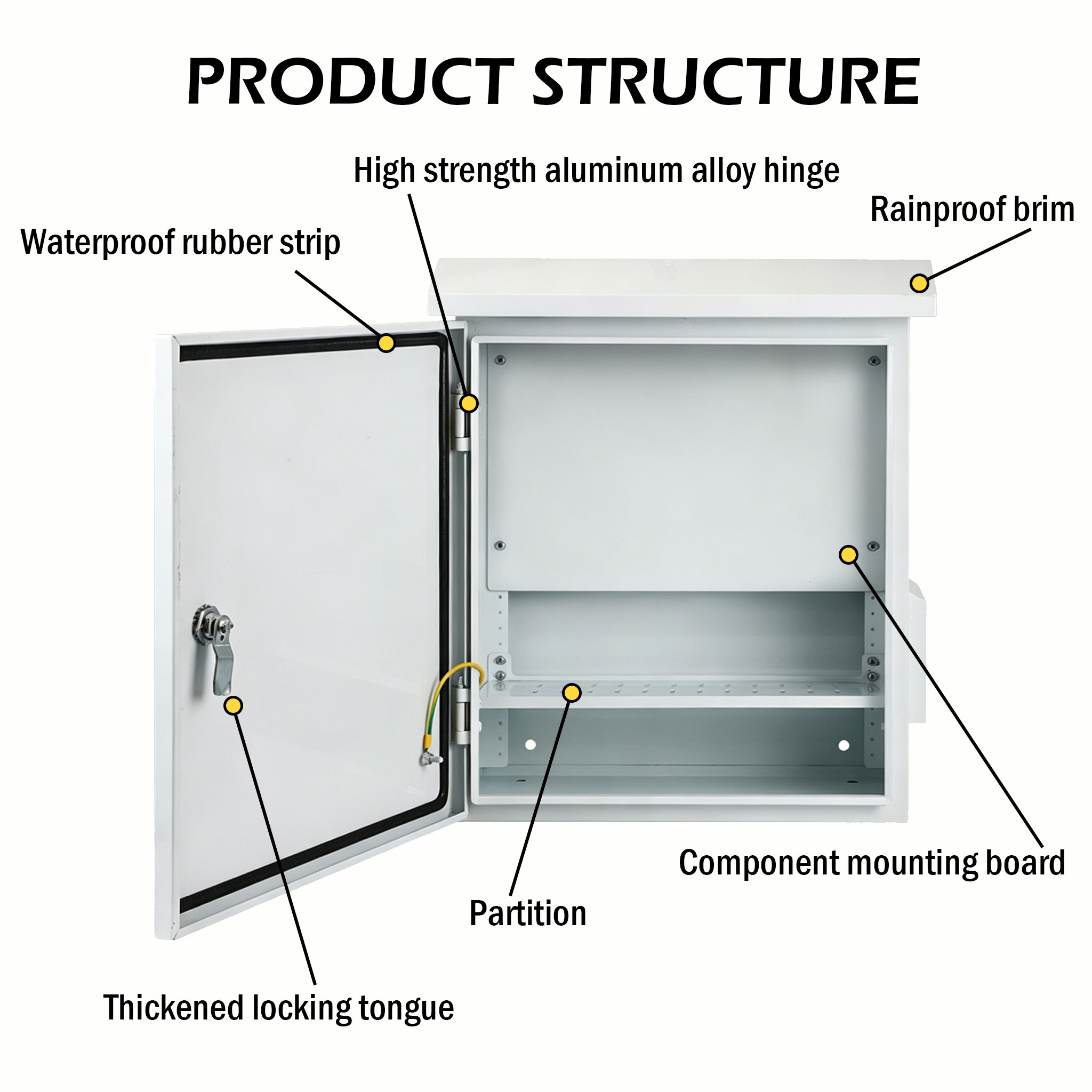
In terms of the implementation path, we adopt a triple sealing defense line: a closed-cell foamed EPDM sealing strip is embedded between the door panel and the box body to form the first continuous sealing surface; All fastening screws are equipped with stainless steel washers and rubber O-rings. The inlet and outlet holes adopt double-layer cable sealing joints.
The practice of photovoltaic power stations in the Gobi environment shows that the scheme of using labyrinth sealing gaskets in combination with silicone rubber gaskets can reduce the permeability of sand and dust by 90%. The sealing design of Ouyue Electric has been upgraded on this basis to a full stainless steel sealing groove +EPDM continuous foaming sealing strip, which has more advantages in sealing life and temperature resistance performance.
For the boxes that are completely exposed to the scorching sun, we add a suspended sunshade top cover above the main box, forming a 50mm air insulation layer between the top cover and the top surface of the box. This design refers to the mature passive insulation solution in the industry - blocking the direct conduction of solar radiation heat to the interior of the box through a double-layer structure.
The measured data show that under the conditions of an ambient temperature of 45°C and a sunlight intensity of 1000W/m², the internal temperature of the Stainless steel distribution box equipped with a double-layer top cover can be reduced by 6-10°C compared with a single-layer top cover, and no additional power consumption is required at all.
Ordinary rubber sealing strips, when continuously baked above 80°C, will harden, crack and undergo permanent compression deformation within 3 to 6 months, leading to sealing failure. Ouyue Electric selects EPDM (Ethylene Propylene Diene Monomer) closed-cell foamed sealing strips, which can withstand a long-term temperature of up to 120°C and a short-term peak temperature of up to 150°C.
Leading sealing material suppliers in the industry have verified that high-quality silicone rubber and EPDM sealing strips can maintain excellent resilience and compression sealing performance in complex outdoor environments, ensuring the realization of IP67 and above protection levels.
In addition, the cross-section of the sealing strip adopts a D-shaped design, with the compression amount controlled at 30% to 40%. This not only ensures sufficient sealing pressure but also leaves an elastic margin to cope with cold and hot cycles.
Although 304 stainless steel itself is corrosion-resistant, under the dual effects of strong ultraviolet rays and high temperatures in the Middle East, the surface of the bare plate will still oxidize and discolor rapidly. We adopt a double-layer electrostatic powder spraying process: the base powder provides adhesion and anti-corrosion for the base, while the flour offers weather resistance and custom colors.
The thickness of each layer of film is strictly controlled within 60-90μm. Industry practice shows that spraying 80-120μm outdoor-specific powder can effectively resist external erosion.
For the Iron distribution box, double-layer spraying is even more crucial - zinc-based phosphating treatment is carried out before spraying, combined with outdoor-grade epoxy-polyester powder. The salt spray test can reach more than 500 hours, meeting export requirements.
Ouyue Electric provides the following test reports or support for each desert-level product.
|
Test project |
Test conditions |
Acceptance criteria |
|
IP65 dust tightness test |
Apply negative pressure in the talcum powder box for 8 hours continuously |
There is no visible dust entering the box |
|
High-temperature operation test |
The ambient temperature is 50°C, and it operates at full load for 48 hours |
The temperature rise inside the box is ≤30K, and the sealing strip is not deformed |
|
Cold and hot cycle test |
-10°C ↔ +65°C, 20 cycles |
There are no cracks in the weld seam and the sealing surface remains intact |
|
Ultraviolet aging test |
UV-A 340nm, irradiance 0.68W/m² |
The coating has no powdering or discoloration, and the color difference ΔE is ≤3 |
|
Salt spray test |
5% NaCl solution, 35°C, 500 hours |
No red rust, and the corrosion spread at the scratch is ≤2mm |
EPC projects in Saudi Arabia and the United Arab Emirates generally accept Chinese standards (GB), but there are still clear requirements for CE certification and protection levels. The stainless steel distribution box of Ouyue Electric has passed the CE certification and IP65 protection grade test.
The product complies with the IEC 60529 enclosure protection standard and meets the minimum threshold requirement of "IP55 or above protection grade" for EPC general contractors in the Middle East photovoltaic project.
Whether you are involved in the equipment matching for large-scale photovoltaic projects in the Middle East such as NEOM in Saudi Arabia and MBR Solar Park in Dubai, or are reserving high-temperature resistant and sand-proof box products for the Middle East market, Ouyue Electric can provide a full range of customized services from material selection, structural design to CE/IP65 certification support.
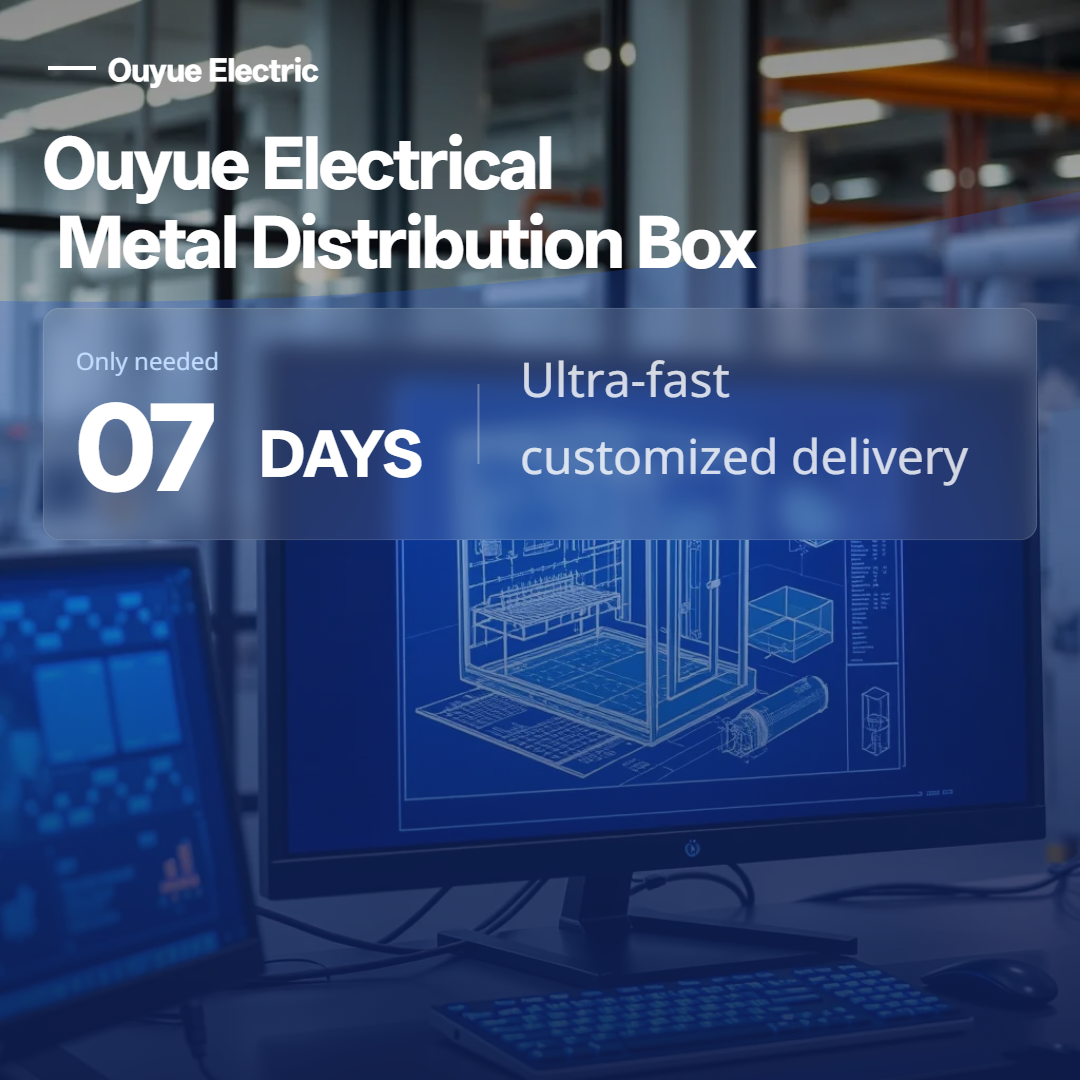
It only takes 7 days to produce the finished product after the product drawings are confirmed. Welcome to send your technical requirements or box specifications for the desert project. We will provide you with a complete solution including protection level verification, high-temperature resistant material selection and rapid sample scheduling to help you successfully secure orders in the Middle East.