News

Distribution Box Lead Time: Why Enclosures Stay Short

2026-10-08 0 Leave me a message

Distribution Box Lead Time: Why Enclosures Stay Short While Transformers Reach 128 Weeks

Investor-owned utilities in the United States plan roughly $1.4 trillion in capital spending through 2030, 21% above the forecast a year earlier, with about $686 billion aimed at transmission and distribution [1]. Power transformer lead time averages 128 weeks and generator step-up lead time 144 weeks [2].

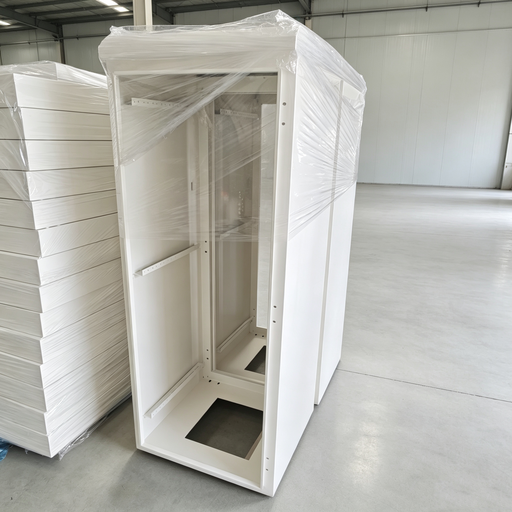
Distribution box lead time stays in weeks, because enclosure production runs on sheet metal lines rather than the winding and test bays used for large equipment. Leaving the enclosure until the main equipment lands is the easiest scheduling mistake to make in 2026.

Why Lead Times Stretched So Far

A second quarter 2025 survey put average power transformer lead time at 128 weeks and generator step-up lead time at 144 weeks [2]. Reuters reporting in July 2026 put lead times for some high-voltage transformers at several years, against around a year in 2020 and 2021 [3]. Switchgear and circuit breakers are tight as well, with high-voltage circuit breakers reaching roughly 125 weeks [4].

Prices reset at the same time. Power transformer prices are up 77% since 2019 and some distribution transformer classes are up 95%; medium-voltage switchgear prices are up about 50% since 2021 and circuit breakers 47% [2]. Hawaiian Electric disclosed in a March 2026 rate case: one distribution transformer unit moved from $3,730 in 2020 to $7,879, a 111% increase [1].

Equipment Lead time Price change
Power transformers 128 weeks Up 77% since 2019
Generator step-up transformers 144 weeks Up 45% since 2019
Some high-voltage transformers 3 to 4 years 4 to 6 times the 2022 level
Medium-voltage switchgear 44 weeks (Q2 2025) Up about 50% since 2021
High-voltage circuit breakers About 125 weeks Up 47% since 2021
Distribution box / enclosure 3 to 5 days stock; 7 to 10 days custom up to 100 units Moves with material, labour and surface finish

Industry figures in the table are survey averages; Ouyue Electric figures are committed ranges.

Why Lead Times Keep Stretching

Demand stacks. Since 2019, generator step-up demand is up 274%, substation power transformers 116%, power transformers 119% and distribution transformers 34% [2]. Data centers, manufacturing plants and renewable projects compete for the same factory slots, and transformers and switchgear are not produced on separate lines for data centers [4].

Replacement adds load on top of new build. More than half of the roughly 40 million distribution transformers installed across the United States are past original service life, and about 55% of in-service units are more than 33 years old [2].

Capacity responds slowly. A new factory takes years to reach full output, so the current shortage will outlast the expansion programs meant to fix the shortage [4]. Wood Mackenzie modelled a 30% shortfall for power transformers and 10% for distribution units in 2025 [2].

Trade policy lifts costs further. Copper tariffs run as high as 50% and Section 232 steel and aluminium duties have widened, so imported equipment and domestic manufacturers relying on imported electrical steel, transformer cores and copper wire all face higher input costs [2].

Why Distribution Box Lead Time Stays Controllable

The difference sits in manufacturing slots rather than total capacity. Large transformers occupy winding, drying and high-voltage test bays, and building the capacity takes years. Enclosures occupy bending, welding and surface treatment lines, and adding the capacity takes months.

Demand does not stack the same way either. A power transformer order spans more than two years from placement to delivery, while the enclosure is a late-stage item on site, so purchasing runs on a separate rhythm from the main equipment. When main equipment slots reach 2028, the enclosure can still enter production months before installation.

For a buyer, the controllability of distribution box lead time works as a hedge against schedule risk rather than a fixed line on the programme.

Three Scheduling Mistakes

One, quoting the enclosure after the main equipment lands. The longer the main equipment lead time, the earlier the enclosure enquiry should start, because the enclosure structure has to match the cable entry arrangement of the main equipment.

Two, waiting for a finished drawing. Material, outer dimensions and mounting method can be fixed before the drawing is complete, and locking the three items leaves only production scheduling as a variable.

Three, treating a single delivery as the simplest option. Batch delivery matches the site installation sequence and usually reduces storage and double handling.

Four Ways to Bring Enclosure Procurement Forward

Distribution box lead time responds to decisions made weeks earlier, not to expediting at the end of a project.

Action Why it works What to fix
Start enclosure enquiries alongside main equipment Enclosure work is not limited by large-equipment manufacturing slots Lock material and size range before the drawing is final
Confirm cut-out and baffle drawings early Fewer mid-project drawing changes and rework Drawings need tolerances and mounting hole positions
Ship in batches instead of one delivery Matches site installation sequence and cuts storage pressure Agree batch quantities and collection deadlines
Keep a material alternative open A substitute exists when one grade rises or runs short 304 inland, 316 coastal

Frequently Asked Questions

How long is a distribution box lead time?

Enclosure production runs in weeks, and the exact figure depends on structural complexity, surface treatment and the current schedule. Compared with a 128-week power transformer lead time, the enclosure rarely sits on the critical path.

Why are large equipment lead times so long?

Demand stacking, fleet replacement and slow capacity expansion act together. Generator step-up demand is up 274% since 2019, more than half of distribution transformers in the United States are past service life, and new plants take years to reach full output [2][4].

Can enclosure lead times stretch too?

The main risks come from material supply and surface treatment scheduling rather than competition for manufacturing slots. Locking material early and confirming the surface finish removes most of the variation.

Where does project delay usually originate?

Utilities and developers now treat equipment availability as the leading concern, and public reporting estimates nearly half of planned data center developments in the United States could be delayed or cancelled because of shortages in power infrastructure and electrical components [3][4]. The enclosure step avoids the exposure through earlier purchasing.

How quickly can a custom enclosure start production?

Stock standard items ship in 3 to 5 days. Custom non-standard orders up to 100 units take 7 to 10 days, expedited delivery can be arranged at 5 to 7 days, and orders above 100 units are quoted separately. Production can be scheduled once material, outer dimensions and mounting method are confirmed, with a minimum order quantity of 10 pieces.

How to Get a Quote

Ouyue Electric builds distribution boxes and cabinet enclosures to drawing in 304 and 316 stainless steel, with protection ratings available in IP54, IP55, IP56 and IP65 and CE certification. To assess distribution box lead time for a project, send the drawing or a size list plus the project milestones through the enquiry form and the technical team will confirm scheduling and delivery.

Related News
Leave me a message
X
We use cookies to offer you a better browsing experience, analyze site traffic and personalize content. By using this site, you agree to our use of cookies. Privacy Policy
RejectAccept