In 2026, investment in artificial intelligence infrastructure continued to surge. In the North American market, cloud service providers such as Microsoft, Google, and Amazon each announced multi-billion-dollar data center expansion plans. Southeast Asia has emerged as a new hotspot for Asia-Pacific data centers, with locations like Johor in Malaysia and Batam Island in Indonesia attracting numerous Chinese and global IDC enterprises. Meanwhile, Saudi Arabia and the United Arab Emirates in the Middle East are positioning AI computing centers as strategic pillars for transforming their oil-based economies.
Unlike traditional enterprise data centers, AI data centers—especially large model training clusters—pose entirely new challenges to power distribution systems.
Challenge One: The power density of a single cabinet surges
The power density of traditional server cabinets is usually 5 to 10kW, while that of AI training cabinets equipped with Gpus can easily reach 30 to 50kW, and liquid-cooled cabinets can exceed 100kW. This means that within the same area of the computer room, the low-voltage power distribution equipment needs to carry and distribute several times more current than before. The specifications of copper bars inside the cabinets, the capacity of circuit breakers, and the heat dissipation requirements have all been comprehensively upgraded.
Challenge Two: Comprehensive tightening of fire protection and safety standards
High power density leads to high heat generation, requiring data center fire protection systems to ensure that distribution cabinets possess flame-retardant, arc-resistant, low-smoke, and halogen-free characteristics. In the event of an internal arc fault, the cabinet must be capable of withstanding the internal arcing pressure and isolating the fault within a single cabinet unit to prevent cascading spread.
These changes are profoundly transforming data centers' selection criteria for low-voltage switchgear. Traditional steel powder-coated enclosures are gradually reaching their performance limits in terms of structural strength, corrosion resistance, and fireproofing, prompting stainless steel switchgear to gain increasing attention among data center procurers.
Scene One: Main distribution cabinet on the low-voltage side of the transformer
As the main entry point of the entire low-voltage system of the data center, the main distribution cabinet on the low-voltage side of the transformer carries all the power from the secondary side of the 10kV/400V transformer to the downstream distribution cabinet. This position has extremely high requirements for the structural strength of the cabinet - the main busbar is large in size, and the short-circuit withstand current can reach over 65kA. The cabinet must withstand huge electromagnetic forces without deformation or cracking in the event of a short-circuit fault. The stainless steel distribution cabinet, with its thickened frame structure and welding forming process, provides reliable physical support for this most demanding working condition.
Scene Two: UPS input/Output Distribution cabinet
The uninterruptible power supply system is the last line of defense for the continuity of power supply in data centers. The UPS input and output distribution cabinet is responsible for power dispatching and protection between the municipal power supply and the UPS, as well as between the UPS and the load. The distribution cabinet at this node has been in continuous operation for a long time, and the maintenance window is extremely short. The stainless steel cabinet body, in combination with detachable installation plates and quick-connect terminals, enables rapid component replacement within the planned shutdown window, thereby reducing maintenance time.
Scene Three: Row Head distribution cabinet
The head-of-row cabinet directly provides power distribution for the server cabinet row and is the final distribution node in the power distribution system, as well as the most numerous power distribution equipment. A data center with a scale of 10,000 cabinets can have hundreds of row head cabinets. The value of stainless steel distribution cabinets in this scenario lies in their modular prefabrication and batch consistency - the columns and copper bar brackets are pre-installed in the factory, and on-site, only the incoming and outgoing line cables need to be connected to put them into operation, significantly shortening the construction period of the data center.
Scene Four: Air conditioning and auxiliary equipment distribution cabinet
In AI data centers, the electricity consumption of auxiliary equipment such as liquid cooling systems, precision air conditioners, water pumps, and fans accounts for as high as 30-40% of the total energy consumption. This type of equipment has diverse requirements for the environmental adaptability of the distribution cabinet - the distribution cabinet near the cooling water pipeline may encounter condensate water and high humidity environments. Stainless steel material can effectively prevent the cabinet body from rusting and ensure reliable power supply for auxiliary equipment.
Why are AI data centers starting to shift from traditional iron powder-coated distribution cabinets to stainless steel distribution cabinets? The following is a comparison from five key dimensions:
| "Comparison dimension" | Iron powder-coated distribution cabinet | Stainless Steel Distribution Cabinet |
| Structural strength | The cabinet body may deform under a large short-circuit current made of cold-rolled steel plate with a thickness of 1.2-1.5mm | 1.5-2.0mm stainless steel plate, yield strength ≥205MPa, resistant to impact and deformation |
| Corrosion-resistant | Depending on the integrity of the coating, the substrate rusts after being scratched | It is protected by a self-passivation film and will not rust after being scratched |
| Fireproof and flame-retardant | The coating may burn or release smoke at high temperatures | Stainless steel is non-flammable by itself and does not release smoke |
| Internal fault arc tolerance | Thin plate structures may crack under arc pressure | Thickened plates + fully welded structure, arc relief channels can be designed |
| Operation and maintenance costs (10 years) | Rust removal and repainting, as well as regular maintenance | Almost maintenance-free |
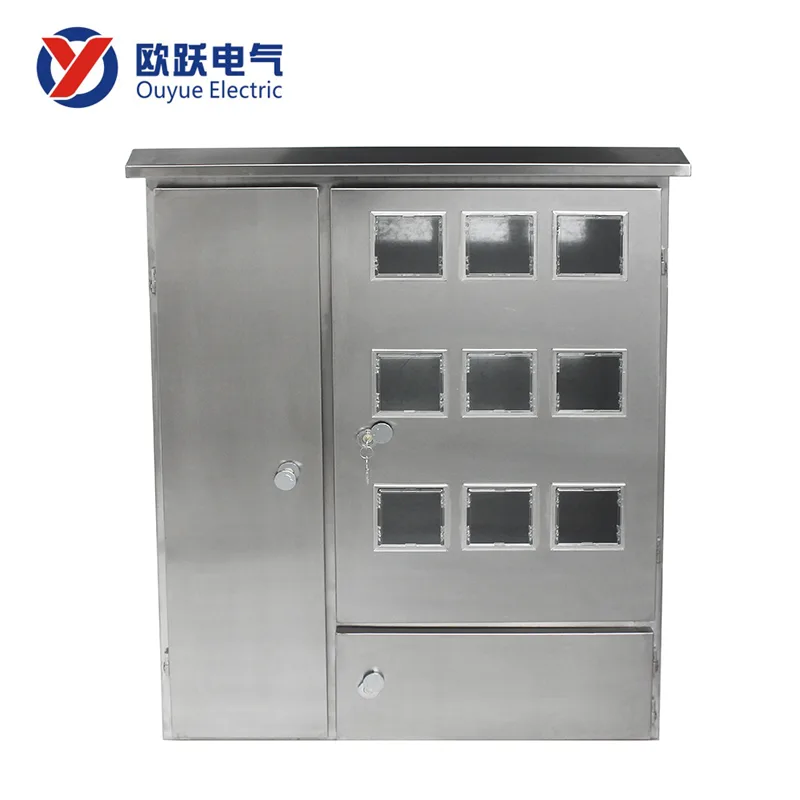
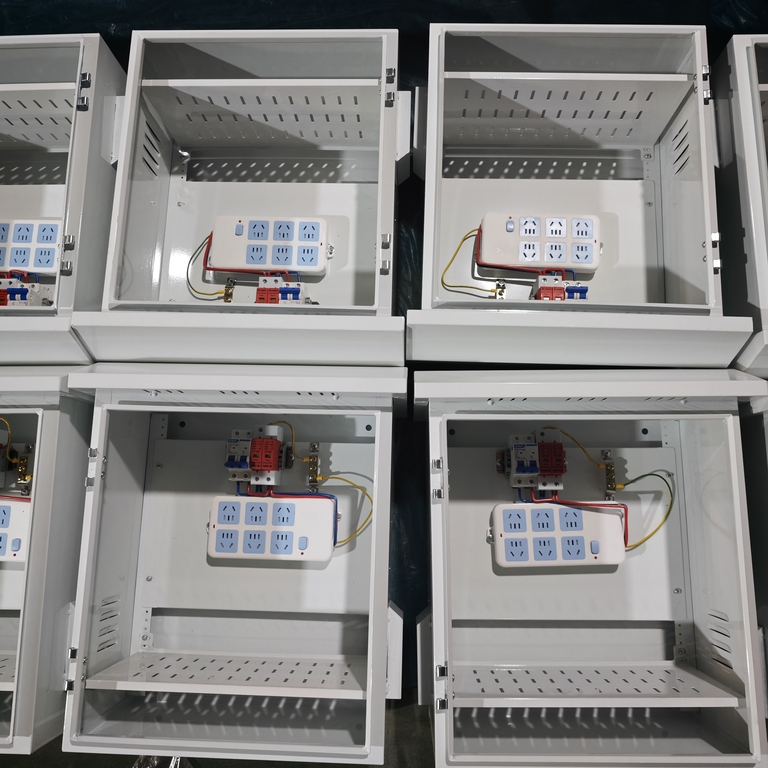
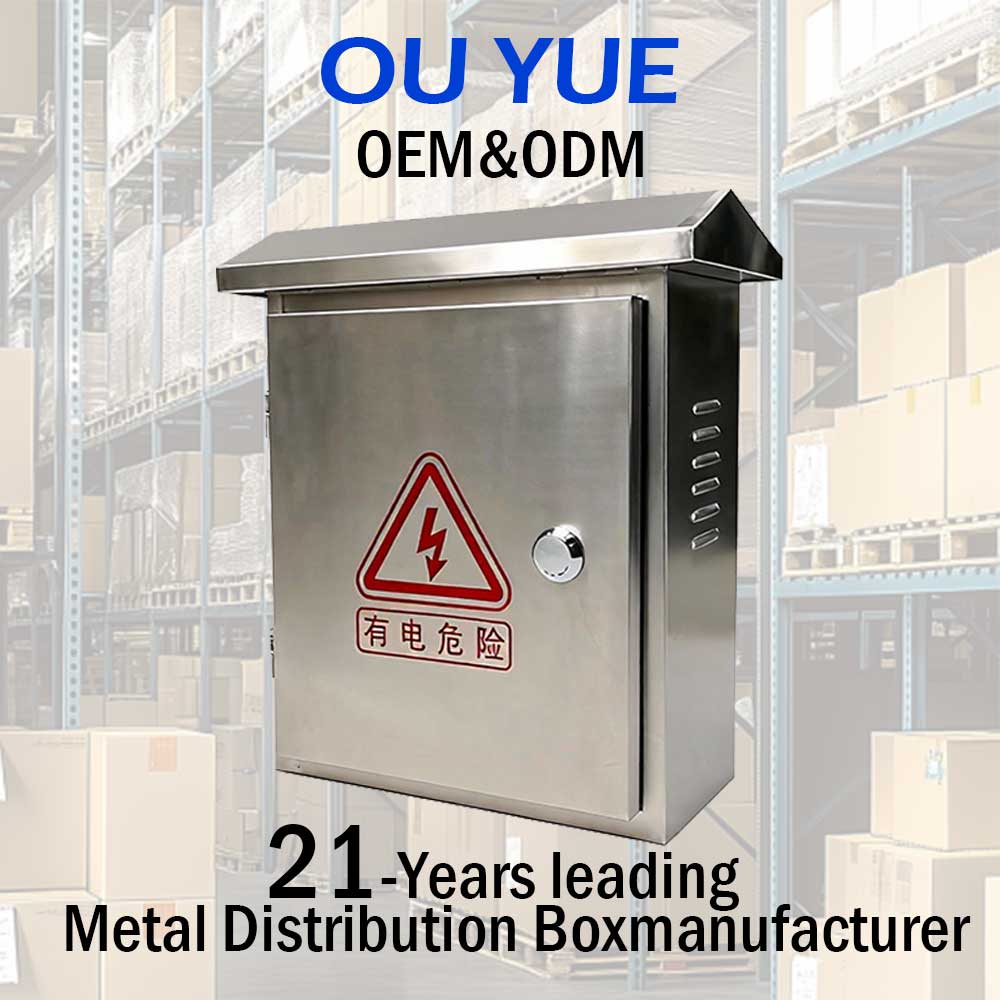
Based on a deep understanding of the power distribution scenarios in data centers, Ouyue Electric has launched a customized stainless steel power distribution cabinet solution for data center applications:
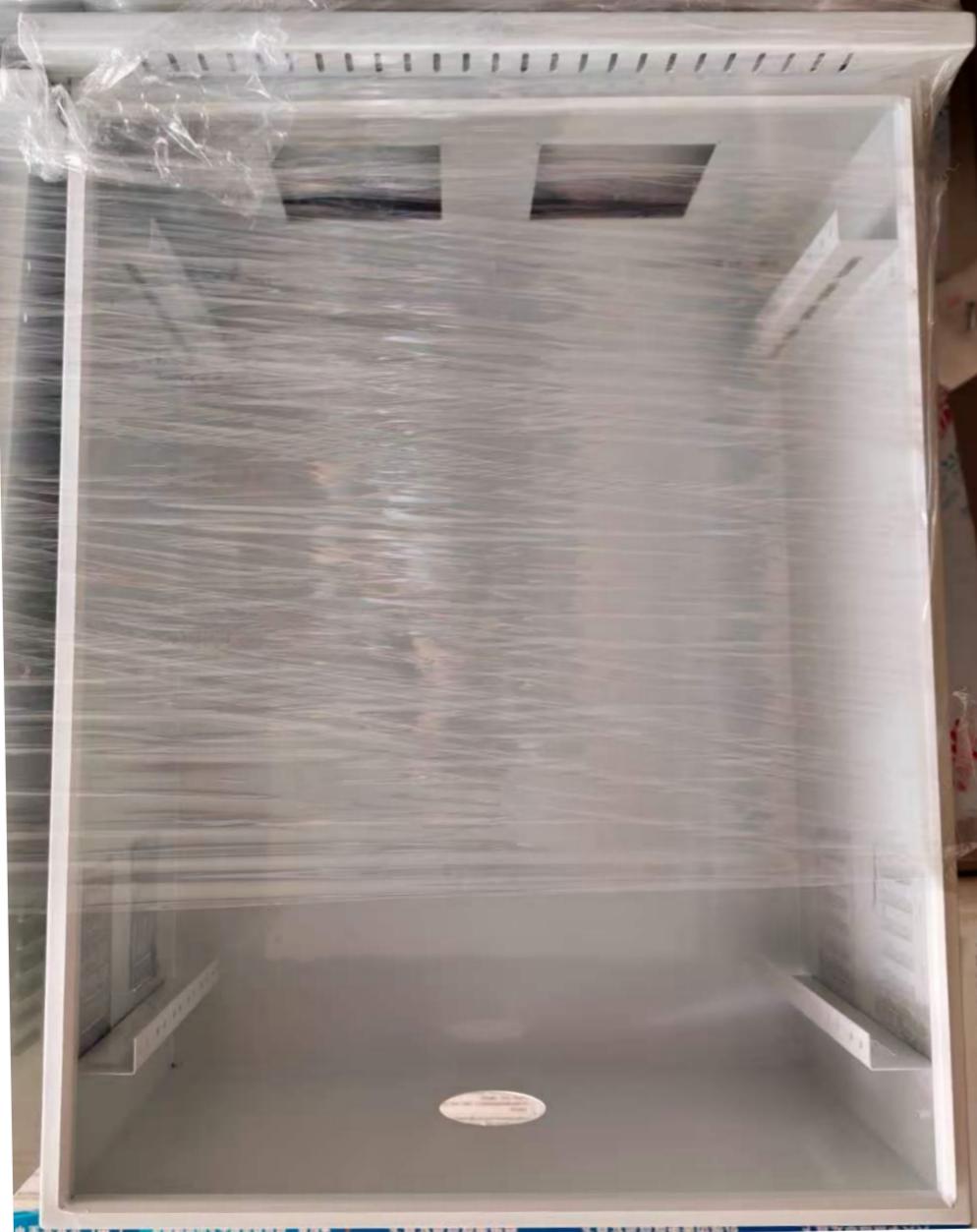
Modular prefabricated installation system: Adjustable installation columns are pre-installed inside the cabinet to adapt to circuit breakers, copper busbars and measurement transformers of different specifications. The installation panels can be pre-assembled in the factory. On-site, only the incoming and outgoing cables need to be connected, significantly shortening the construction period of the data center.
Internal arc fault protection structure: For key nodes such as the main distribution cabinet, the cabinet body can be equipped with internal insulating partitions, phase-to-phase isolation barriers and top pressure relief channels. Once an arc fault occurs inside, the pressure is released upward through the pressure relief channel to protect the safety of the operator.
Heat dissipation and ventilation optimization: The high-power-density distribution cabinet is equipped with temperature-controlled active fans and bottom air intake louvers. Combined with the optimized layout of internal heat-generating components, it ensures that the temperature rise inside the cabinet is controlled within the standard range during full-load operation.
Certification and Export support: The product has passed the CE certification and can cooperate with customers to complete the type tests and factory test reports required for the bidding of data center projects.
Stainless steel power distribution cabinets are being included in the latest generation of power distribution equipment procurement standards by global data center operators. Ouyue Electric has always been dedicated to the customized manufacturing of metal distribution boxes and cabinets. With the production line capacity and quality control system of the source factory, it provides data center customers with stainless steel distribution solutions that stand the test of time.
It only takes 7 days to produce the finished product after the product drawings are confirmed. Whether you are involved in a data center construction project in North America, Southeast Asia or the Middle East, you are welcome to send your technical requirements or power distribution system topology diagrams. We will provide you with solution suggestions and sample scheduling as soon as possible.