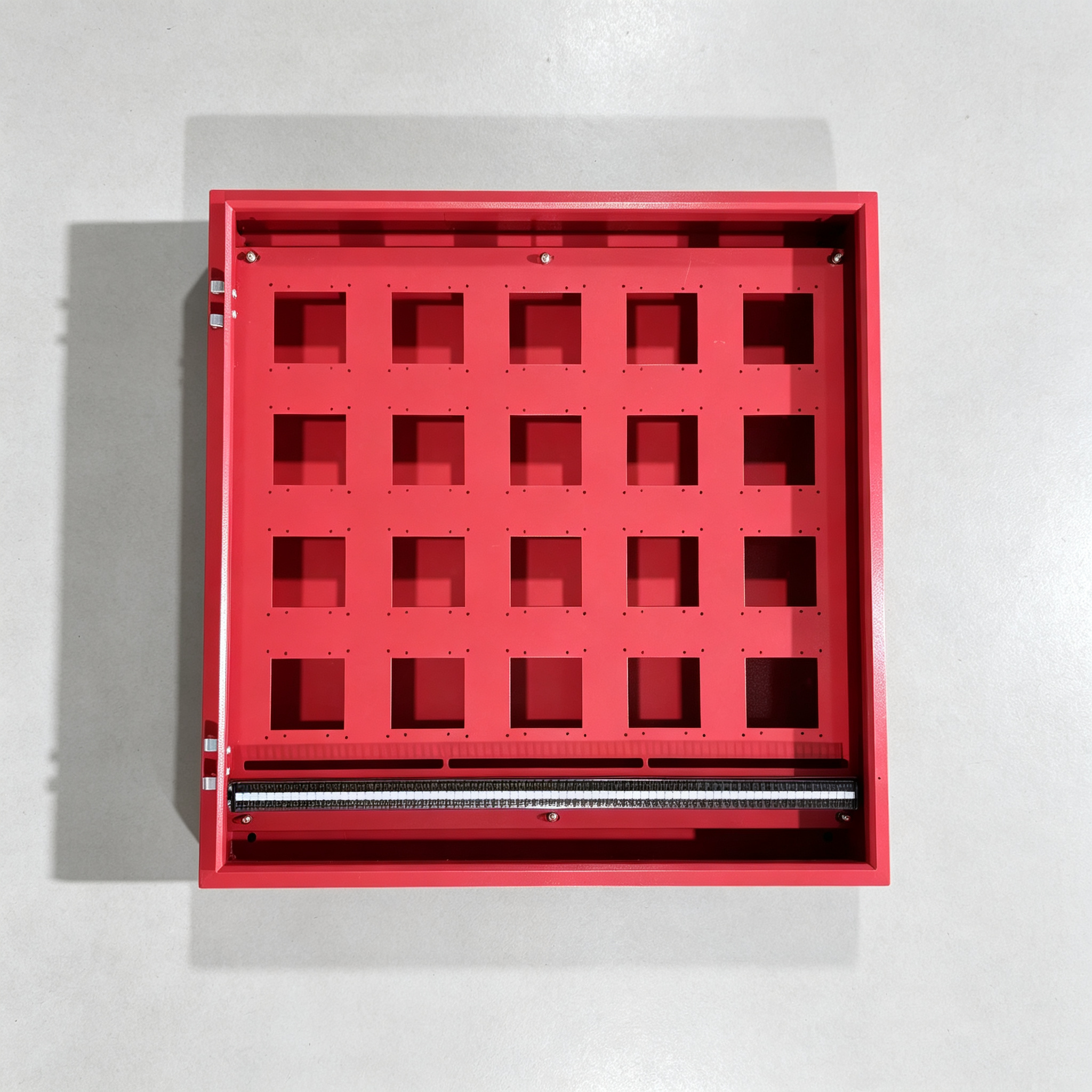
Fire protection enclosures are the housings shielding electrical equipment, communication systems and sensitive industrial components from fire. The category keeps expanding, and demand for the fire terminal box tracks construction and retrofit cycles rather than any single region.
Industry figures put the global fire protection enclosure market at USD 2.831 billion in 2025, growing at a 6.20% compound annual rate. Annual output sits near 2.6 million units against roughly 3.4 million units of production capacity. Manufacturers average a 32% gross margin, and unit prices run from about USD 450 to USD 2,500 depending on size, fire rating and whether cooling or suppression systems are built in.
The wider fire electrical equipment market reached roughly USD 84.72 billion in 2025, up 8.6% year on year, and is projected to pass USD 126 billion by 2030 at a compound rate near 7.9%. Asia-Pacific leads with a 37.5% share; North America reached USD 22.1 billion and Europe USD 18.9 billion. Steel dominates fire protection enclosure manufacturing because of structural strength and fire performance. In damp locations — cable shafts, plant rooms, basements — stainless steel and cold-rolled steel have become the recommended choices. Most specification decisions for the fire terminal box get made in damp locations.
A fire terminal box normally goes into a cable shaft, a plant room or a basement, and humidity varies enormously between installations. Material selection is the first real fork in the road.
| Specification | Iron (cold-rolled steel) | Stainless steel (304 / 316) |
| Typical locations | General indoor areas, plant rooms, risers | Damp areas, basements, cable shafts, coastal and high-humidity sites |
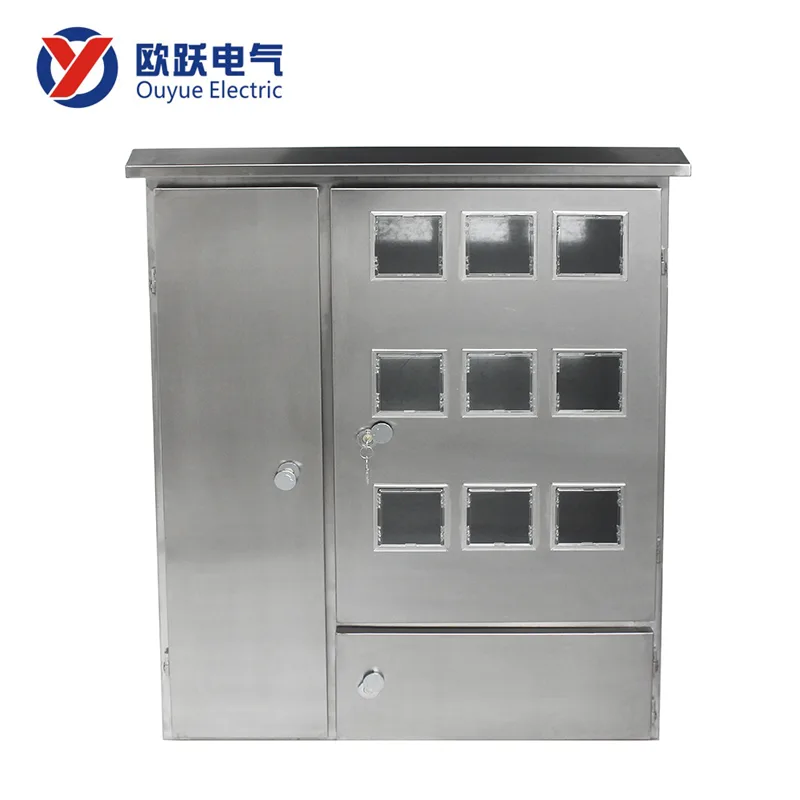
| Corrosion resistance | Depends on the surface coating | Inherent to the material. 316 contains molybdenum and resists chloride attack better |
| Surface finish | Powder coating, any RAL colour | Brushed or powder coated |
| IP rating available | IP65 and below | IP65 and below |
Iron enclosures are cold-rolled steel: lower cost, easy to fabricate, and entirely adequate indoors. Stainless enclosures are usually 304 or 316. The molybdenum content in 316 gives superior resistance to chloride corrosion, which matters on coastlines, in chemical plants and in any environment with salt fog.
The most common mistake on a fire terminal box is not "304 or 316" — the real question is whether the location counts as damp at all. The following situations are normally treated as damp:
A mechanically ventilated, air-conditioned indoor switch room normally does not need stainless steel. When the call is genuinely borderline, specify up. The cost premium for stainless steel is small against the overall budget of a fire system, while the cost of rework after a corroded enclosure fails inspection is not.
Mixed projects can use both materials in one order: stainless steel for outdoor and damp zones, powder-coated iron for indoor switch rooms. Ouyue labels material and colour by zone so nothing gets mixed up on site.
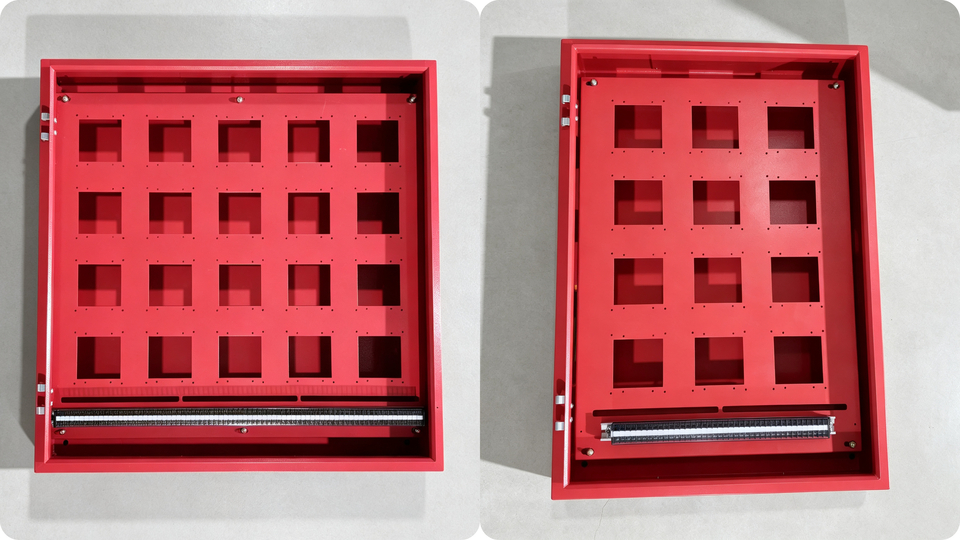
Red is the standard visual identifier for fire equipment. In an emergency, a technician has to find one specific box among hundreds, and a red powder coating shortens the search from "read every label" to "spot the target immediately".
The coating on Ouyue fire terminal box enclosures is an outdoor-grade powder finish, so the colour doubles as corrosion protection and does not fade under long-term damp. Red is standard; any other colour can be matched to the RAL range.
For projects with a house visual standard, Ouyue can also match a customer-supplied colour reference and confirm the match with a sample before volume production.
Fire terminal box enclosures are built to drawing. Length, width, height and sheet thickness are all adjustable, and the standard minimum order quantity is 10 units — a limit applied to every customization line below, including markings.
| Item | Customizable range | MOQ |
| Enclosure dimensions | Length × width × height, any combination | 10 units |
| Sheet thickness | To requirement | 10 units |
| Material | Iron (cold-rolled steel) / stainless steel (304, 316) | 10 units |
| Surface colour | Full RAL range; red as standard | 10 units |
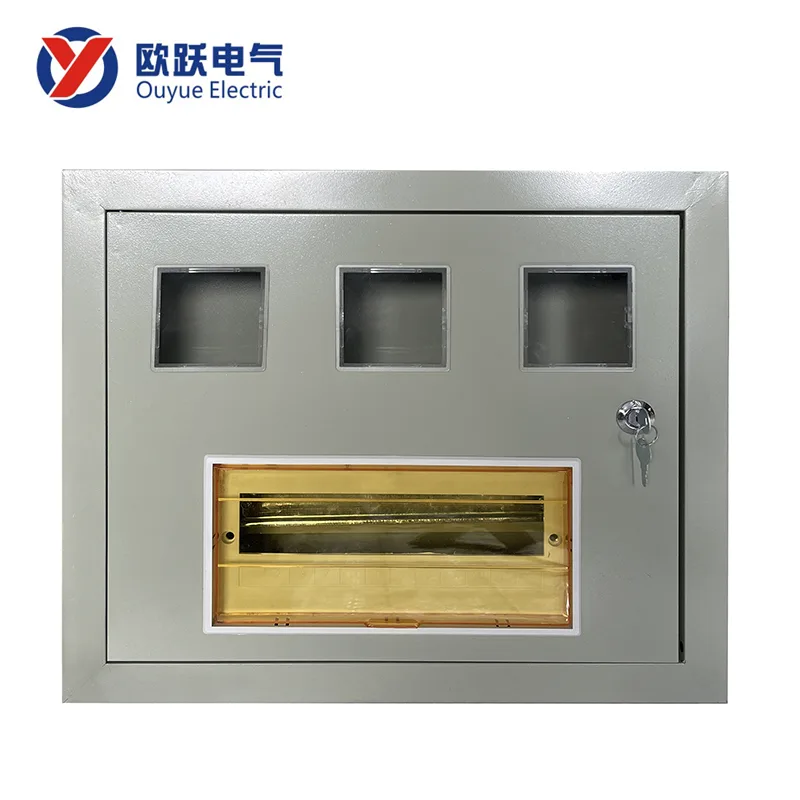
| Cut-outs | Size and position machined per drawing | 10 units |
| Observation window | Optional | 10 units |
| Internal baffle | Fabricated per drawing | 10 units |
| Markings | Fire warning sign, brand logo, project number | 10 units |
Confirming six points before requesting a quote removes most of the back-and-forth from a custom enclosure order.
| Information to confirm | Why the information matters |
| Installation environment (indoor / outdoor / damp / corrosive) | Decides whether iron or 304 / 316 stainless steel is needed |
| Mounting method (surface, concealed, wall-mounted) | Affects enclosure structure, door type and fixing |
| Dimensions and sheet thickness | Must match the actual installation space and load requirements |
| Cable entry direction and cut-out positions | Machined to drawing; positions are difficult to change once formed |
| Whether an observation window is needed | Changes how the door is fabricated, so decide before sampling |
| Internal baffle layout | Fabricated to drawing; affects internal assembly and service access |
| Order type | Standard lead time | Express lead time (subject to coordination) |
| Standard products (in stock) | 3–5 days | — |
| Custom non-standard products (up to 100 units) | 7–10 days | 5–7 days |
| Custom non-standard products (more than 100 units) | Discuss | Discuss |
Before delivery, three checks are worth running early, because the three items below are the most common causes of a failed inspection: whether terminal connections are properly crimped, whether wire numbering is clear and continuous, and whether cable entry holes are sealed.
For selection and cut-out planning, see the fire terminal box enclosure product page, or compare material options across the stainless steel distribution box and metal distribution box ranges.
What materials are available for the fire terminal box?
Iron (cold-rolled steel) or stainless steel in 304 and 316 grades. 316 is the better choice for coastal and high-salt-fog environments. Fire terminal box enclosures are available in IP65 and below and carry CE certification.
What is the minimum order quantity?
10 units, and the same minimum applies to every customization line: dimensions, sheet thickness, material, colour, cut-outs, observation window, internal baffle and markings.
Can dimensions and cut-outs be customized?
Yes. Length, width, height and sheet thickness are all adjustable, and cut-out size and position are machined per drawing. Send a drawing or dimensions and the Ouyue technical team will confirm material, cut-outs, observation window and baffle layout.
Fire protection contractors, distributors and importers are welcome to contact Ouyue for a custom solution and volume pricing. Send a drawing or dimensions and the Ouyue technical team will confirm material, cut-outs, observation window and baffle layout. Leave details through the enquiry form and Ouyue will come back shortly.