Products
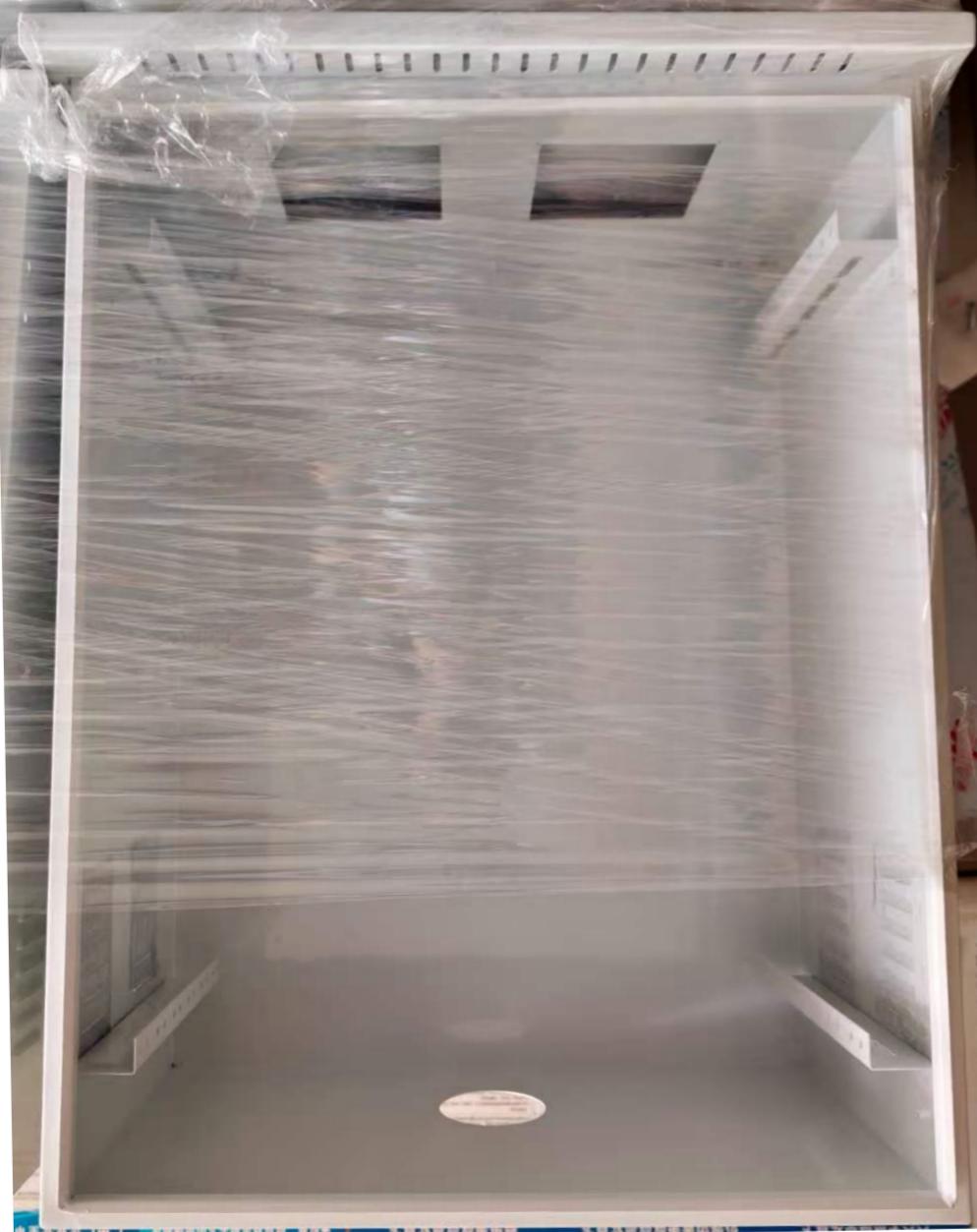
Custom Floor-Standing Outdoor Equipment Cabinet
  • Custom Floor-Standing Outdoor Equipment CabinetCustom Floor-Standing Outdoor Equipment Cabinet

Built to Drawing, Adjustable Shelves

A custom floor-standing outdoor cabinet starts with the device, not the box. Clear width and depth come from the faceplate, plate thickness follows height and shelf span, and nine options - width, depth, height, thickness, shelf count, rail spacing, louvre position, base size and lock type - are fixed on the drawing before a sample cabinet is built.

    Custom Floor-Standing Outdoor Cabinet: How to Specify

    Specification starts with the device, not the box. Device length, width, height and faceplate cut-outs are measured first; clear width and clear depth follow from the device figures, and rail spacing and shelf depth follow from the clear dimensions. A faceplate wider than clear width leaves the door unable to close, and a faceplate much narrower leaves side gaps where cold and warm air short-circuit.

    The drawing fixes device dimensions, cable entry direction and service clearance together, so later stations do not rework.

    Plate Thickness Follows Height and Span

    Thickness is set by cabinet height, shelf span and device weight. A taller cabinet or a longer shelf span calls for heavier sheet; too little thickness lets the folded shelf sag in the middle, the door bows with the frame, and the gasket stops sealing. Heavier sheet than the duty needs adds weight and cost, and the floor anchors carry the extra load. Thickness is derived from cabinet size at the drawing stage rather than picked from a fixed list.

    Size Is Limited by Transport

    Width, depth and height also answer to transport. A body beyond normal van capacity splits into an upper and lower section, or into front and rear halves, bolted on site with a sealing gasket, and the joint line avoids louvres and cut-outs. A custom floor-standing outdoor cabinet drawing states base height and door swing beside clear width and depth. Where the floor is uneven, shims under the base level the body.

    Shelf Count and Position

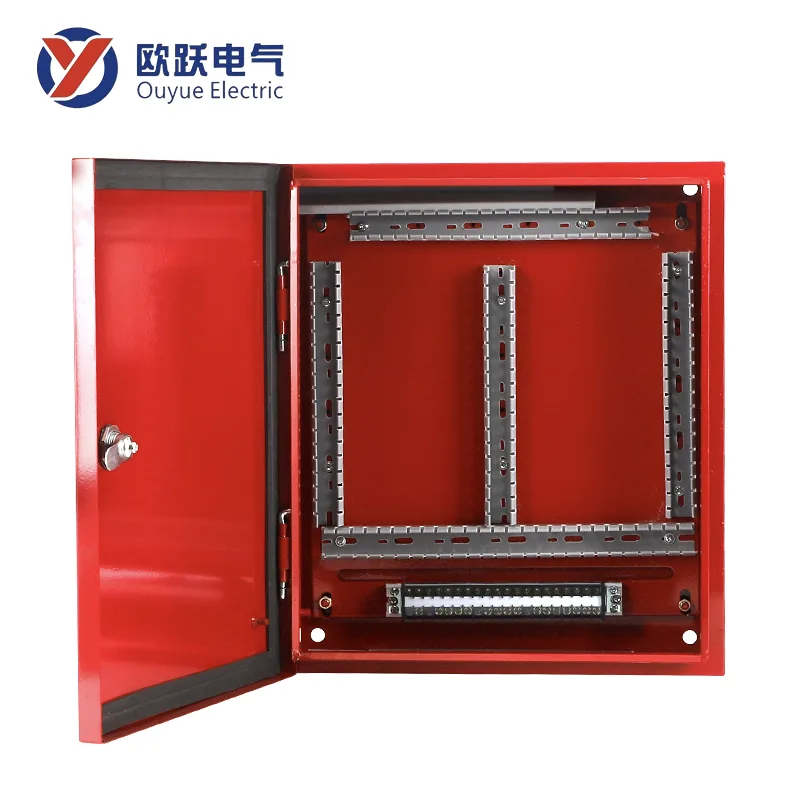
    Shelf count follows device tiers: three tiers take three shelves, four take four, and spacing varies within one cabinet. Heavy devices sit low, and devices with dense terminals sit at working height. Rail slots repeat at equal pitch, so a shelf moves by changing slots rather than by drilling new holes. Folded edges and rails share the load, and punched holes double as an air path and a cable tie point.

    Cut-Outs, Louvres and Base

    Cut-outs, louvres and base account for most drawing errors. Cable entry holes match cable diameter and gland thread: an oversized hole lets the gland sit loose, and an undersized hole blocks the cable.

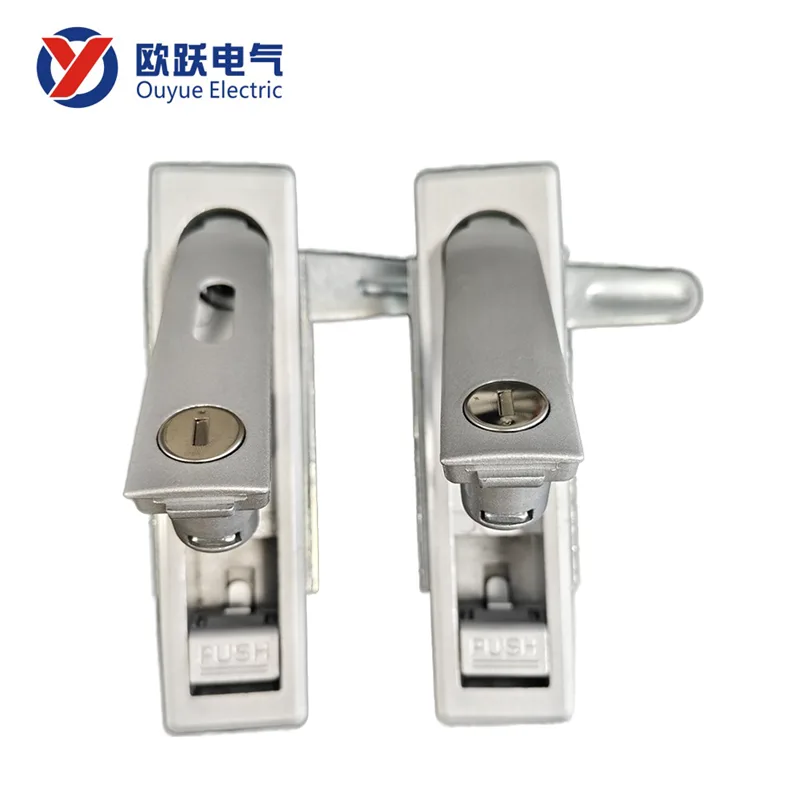
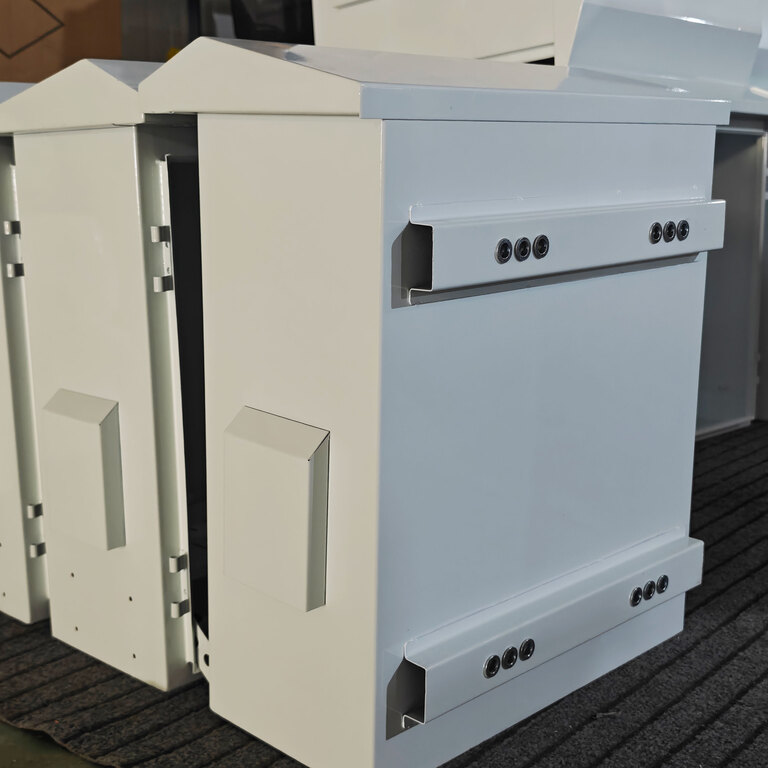
    Louvres sit on the intake side, with warm air leaving at the opposite wall or the top. Base cavity height follows the coil radius of the cable, so cable loops inside the cavity before rising into the device zone, and water running down a cable lands there. Locks come as lever or quarter-turn, keyed alike or keyed individually.

    Material and Finish

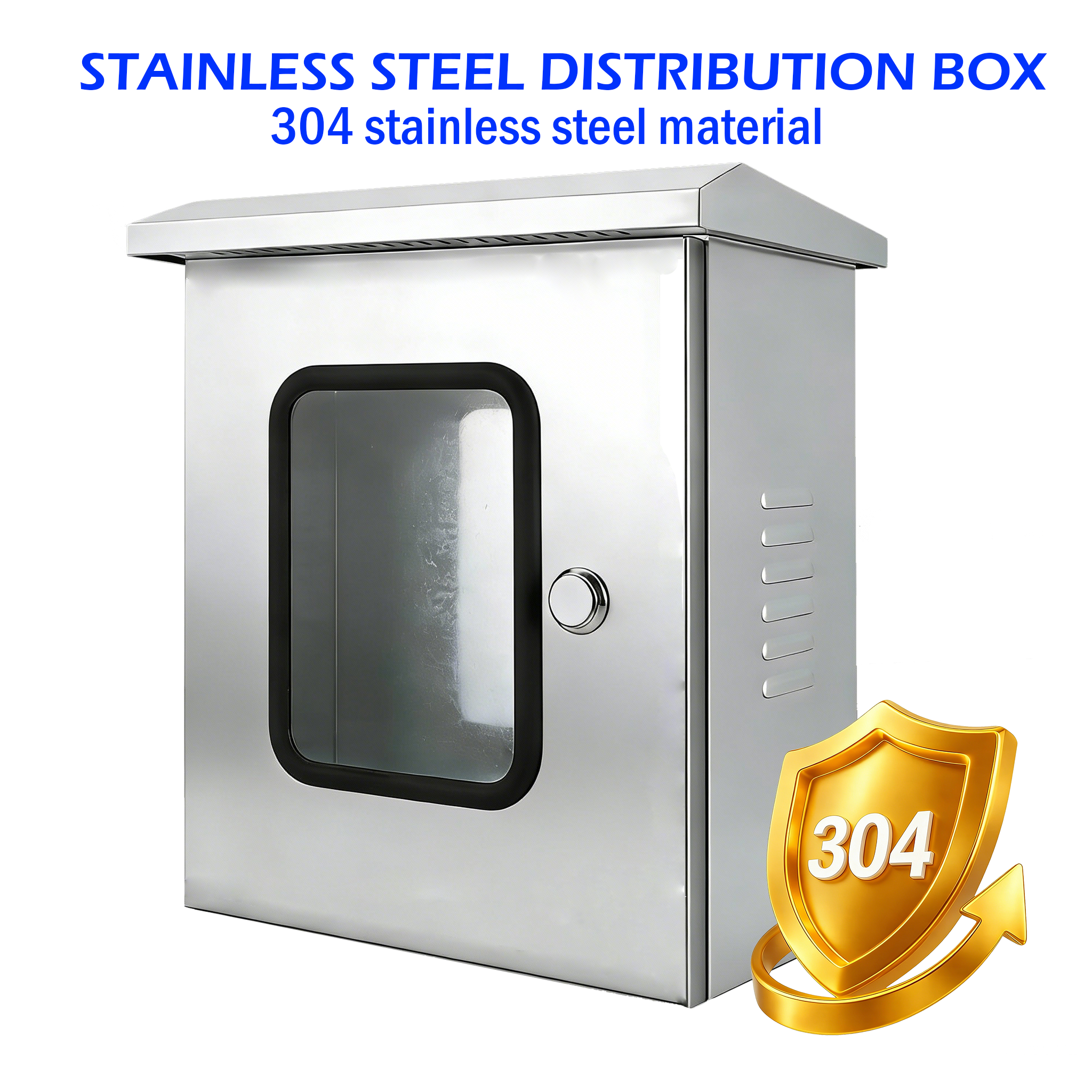
    Body material comes in mild steel, 304 stainless steel or 316 stainless steel. Coastal and chemical sites take 316, inland industrial sites take 304. Mild steel bodies are powder coated to a colour card or a customer sample; stainless bodies stay brushed or take powder coating for colour matching. Protection ratings available in IP54, IP55, IP56 and IP65, confirmed together with the cut-out layout, because moving one cut-out changes the rating calculation.

    Drawing, Sample, Batch

    The route runs drawing, sample, batch. One sample cabinet is built first and checked for clear width, shelf spacing, cut-out position and door swing, with a device fitted once. A custom floor-standing outdoor cabinet moves to batch production on the sample fixtures and inspection datum. Design changes belong at the sample stage; a change after batch release reworks the bending program and the welding jig.

    Where the Cabinet Is Used

    A custom floor-standing outdoor cabinet suits sites with no wall to hang a box on, and equipment too large for a wall-mounted enclosure. Typical positions include roadside telecom and small-cell equipment, NVR and access-control hosts in industrial parks, control units at charging and battery-swap stations, data loggers and combiner units at PV plants, traffic signal and plate-recognition cabinets, and edge computing nodes on lighting poles.

    Site conditions decide the options rather than the other way round. Coastal sites and salt fog call for 316 with a brushed finish. Inland dust calls for louvres on the intake side only, with the outlet kept high. Sites under snow load need the hood edge clear of the door swing, so ice does not block opening. Sites without a paved base need the anchor plate sized against wind load and soil bearing.

    Equipment swaps are the common case. A telecom unit replaced by a taller chassis moves the shelves; a charging controller upgraded to a wider module changes rail spacing, while the body, hood, base and door carry over. Reuse is the practical reason to keep rail spacing and shelf depth on the drawing instead of inside a welded frame.

    Nine Options Fixed by the Drawing

    Option What the drawing fixes Effect on site
    Clear width Between left and right rails, from the device faceplate Device enters without side gaps
    Clear depth From shelf depth and cable bend radius Door closes over wired terminals
    Height Tier count plus headroom for airflow Shelves fit without squeezing the top tier
    Plate thickness From height, shelf span and device weight No shelf sag, gasket stays loaded
    Shelf count One per device tier, plus a spare slot Room for a later module
    Rail spacing Equal pitch, matched to device mounting pattern Shelf height moves without new holes
    Louvre position Intake side of the devices, outlet high Air runs the full height
    Base size Cavity height from cable coil radius Water breaks before the device zone
    Lock type Lever or quarter-turn, keyed alike or single One key ring or separate access

    Delivery

    Zhejiang Ouyue Electric Co., Ltd. is located in Liushi Town, Wenzhou, Zhejiang. A custom floor-standing outdoor cabinet is machined to drawing, the minimum order is 10 units, and CE certification is in place. A device model change moves shelf position and the cut-out drawing while the body structure carries over.

    Structural reasoning behind the rails, the shelves and the lockable base sits in floor-standing outdoor cabinet. Send the device drawing for a quotation.

    Send Inquiry
    Contact Info

    If you have any enquiry about Metal Distribution Box, Metal Cabinet, Metallic Electrical Meter Box or cooperation, please feel free to email us at jdaisy@ouyueele.com or use the following inquiry form. Our sales representative will contact you within 24 hours. Thank you for your interest in our products.

    Ready to Power Your Projects with Precision?

    ➤ Join 500+ Global Clients Trusting Ouyue Electric!

    ➤ Get a FREE Sample

    ➤ Request Instant Pricing for Bulk Orders

    ➤ Experience China’s Top-Rated Manufacturer Service

    ➤ Contact Us Now: Where Quality Meets Affordability!


    X
    We use cookies to offer you a better browsing experience, analyze site traffic and personalize content. By using this site, you agree to our use of cookies. Privacy Policy
    RejectAccept