News

Distribution Box Enclosures Wait for Assembly: Punch First

2026-10-28 0 Leave me a message

Distribution Box Enclosures Wait for Assembly: Punch First

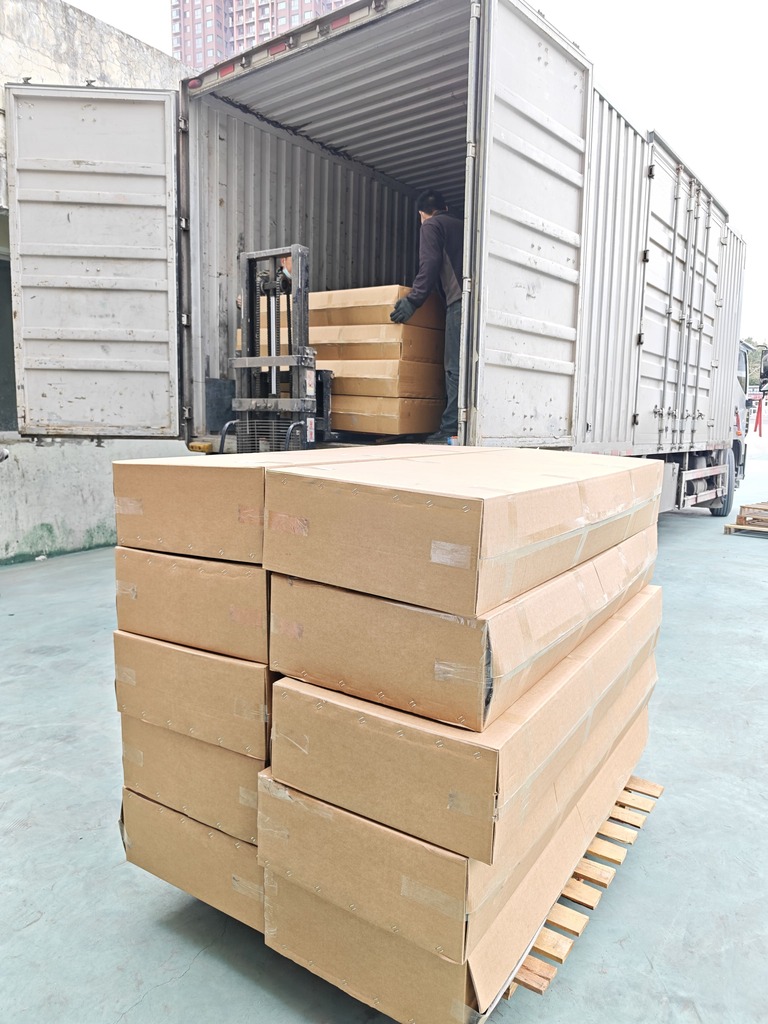
Four process steps are finished on the batch stacked in the pre-assembly area: sheet metal, welding, grinding and powder coating. The enclosures sit on wooden pallets under stretch film, waiting for the assembly team to pull a work order. No doors, no components, no wiring yet.

Three Features Visible in the Photos

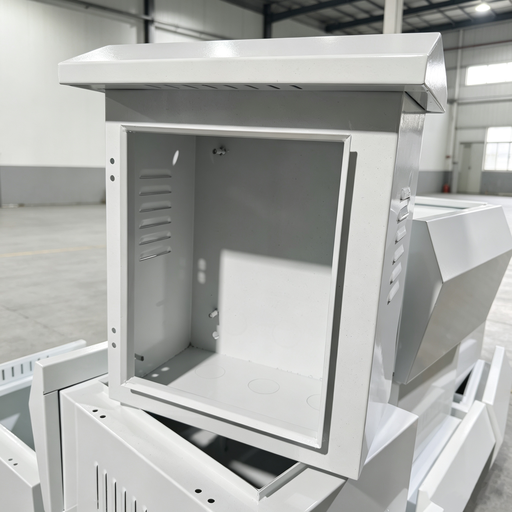
Same size across the run. Enclosure heights line up on one pallet and the front openings align, so the brake program and tooling stayed unchanged for the whole batch. Mounting holes are interchangeable between units, and the assembly team lifts any body off the stack without matching a door to one specific shell.

One-off samples are laid out by hand, with half a millimetre to a full millimetre of drift between pieces, so doors need fitting on site. A batch run through one brake program and one tool set keeps hole position inside tooling tolerance. A distribution box enclosure from the same run is a drop-in match for the door folded for the first unit.

Louvres are already punched. Blocks of stamped louvres face outward on the side panels, blades turned inward and openings pointed down. Cooling area is fixed at the sheet metal stage, and nobody cuts a side panel again during assembly.

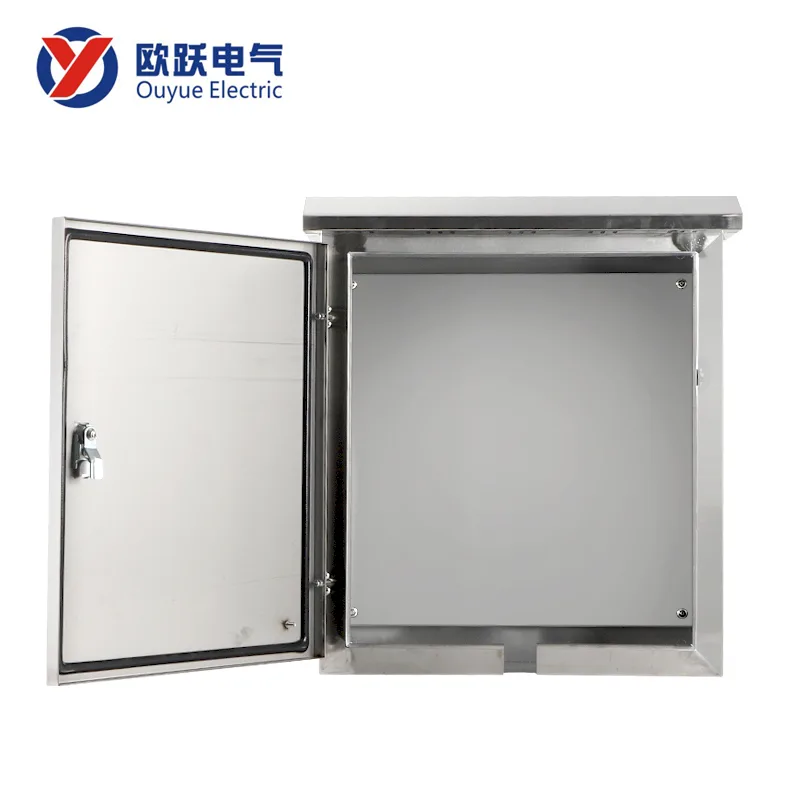
The front is a folded opening. Four edges are hemmed into a gasket seat with the centre left open, so doors and components both enter from the front face. Flatness along the hem decides how well the gasket seals once a door closes.

Every Hole Is Punched Before Coating

A distribution box enclosure carries three families of holes: round and square holes for component mounting, cable entries, and louvres for heat. All three families sit inside the coating.

Punch after coating and the cut edge stays bare. A sheared steel face carries no film over the metal grain, moisture creeps along the cut, and rust lifts the powder from behind. The surface reads intact until a blister appears. The rule on every distribution box enclosure leaving the shop: cut every hole at the sheet metal stage, then put no cutter to the box after coating.

The assembly team receives a finished shell. Three tasks remain: mount components, terminate wiring, hang doors. All three are threaded or plug-in connections, with no chips and no breach of the coating.

Three Rules in the Pre-Assembly Area

On pallets, never on the floor. Timber bearers lift each stack at least ten centimetres off concrete. Shop floors take up moisture, and a steel panel laid flat on concrete rusts at the base first.

The pallet doubles as a transport unit. A forklift moves the whole stack to the assembly bay without unwrapping or upending a single box. A distribution box enclosure may sit under film for three days to a week, waiting on assembly scheduling rather than on missing parts.

Batch number on the film. A label tucked inside disappears once the wrap goes on, so the shop writes batch and quantity on the film with a marker. The assembly team reads the number without breaking the seal.

Stack height follows plate thickness. An empty shell draws stiffness from folded edges and the frame, and rigidity is lowest before components go in. Stack too high and the gasket seat on the lower boxes takes a slight set, leaving the seal short of full compression. Stack height in the photos follows the usual ceiling for the size, not the number of boxes a pallet can carry.

Sheet Metal and Assembly Stay in Separate Bays

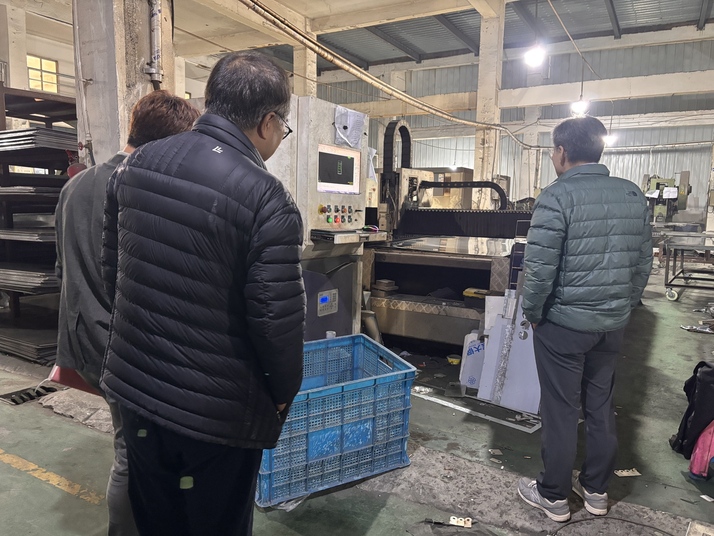
Sheet metal work on a distribution box enclosure makes chips. Assembly brings components. Put the two in one bay and swarf lands on terminals and cable runs.

Separation buys a second benefit: shells are cleaned before release to assembly. Air blows the interior, a cloth wipes the hem, and the welds get a look. Air first, hem second, welds last. A shell with porosity or undercut goes back for repair, then back through coating, and never forward with a defect.

What Each Stage Owns

Feature State in the Photos Effect on Assembly
Stamped louvres Formed, blades inward, openings down Cooling area fixed, side panel stays uncut
Front hem Folded on four edges, centre open Flat hem is what the gasket seals against
Base entries Openings reserved, glands not fitted Cables enter from below, coating intact
Surface Powder coated, one colour per batch No touch-up paint, no bare cut edge

Material, Rating and Order

Steel, 304 stainless or 316 stainless by requirement. Protection ratings available in IP54, IP55, IP56 and IP65. Width, height, depth and plate thickness built to drawing. CE certification held. Minimum order 10 units. Export packing is a timber crate with pearl wool, a different job from the stretch film in the photos.

Send a drawing and quantity for a quotation through the contact page.

Related News
Leave me a message
X
We use cookies to offer you a better browsing experience, analyze site traffic and personalize content. By using this site, you agree to our use of cookies. Privacy Policy
RejectAccept