News

Stainless Steel Enclosure Stacking: Three Floor Rules

2026-11-19 0 Leave me a message

Stainless Steel Enclosure Stacking: Three Floor Rules

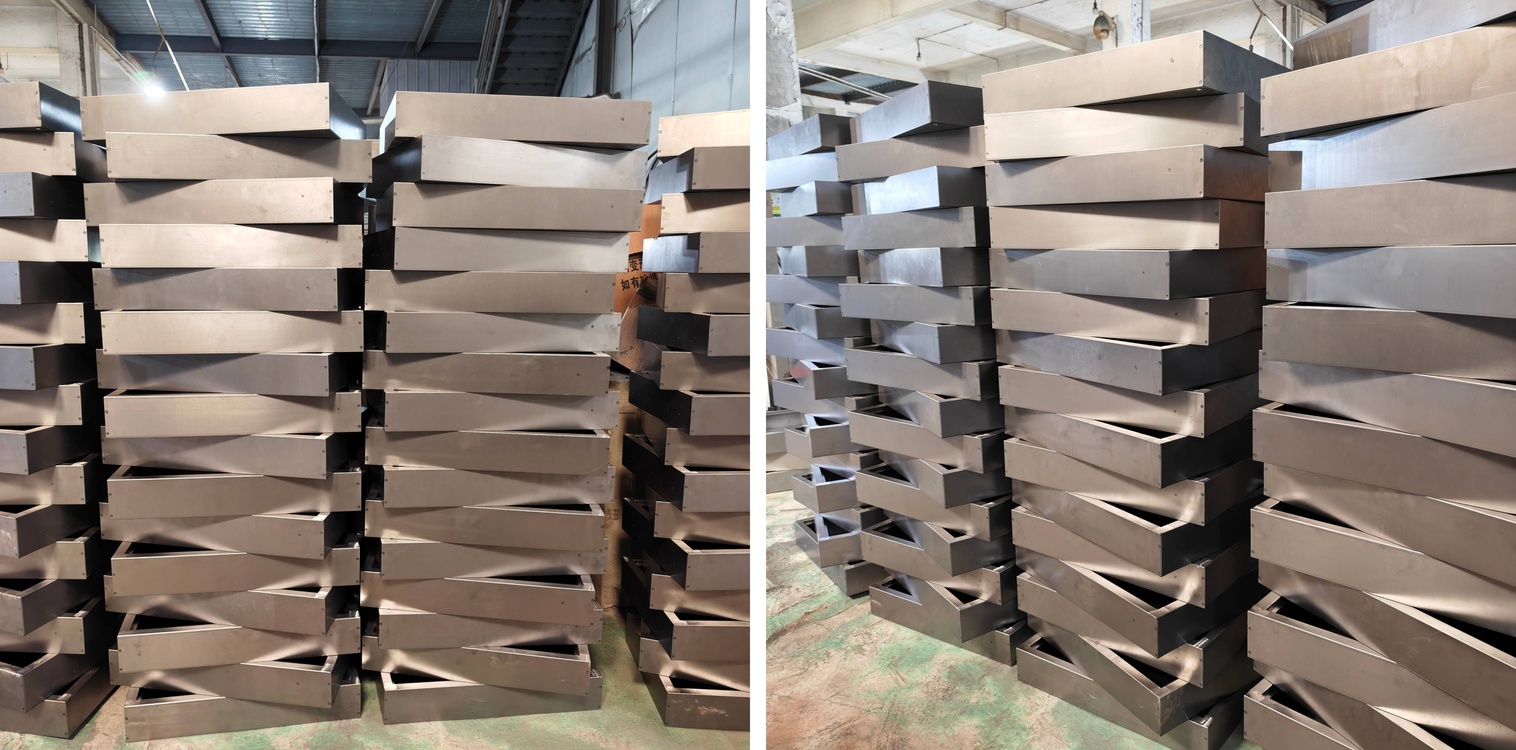
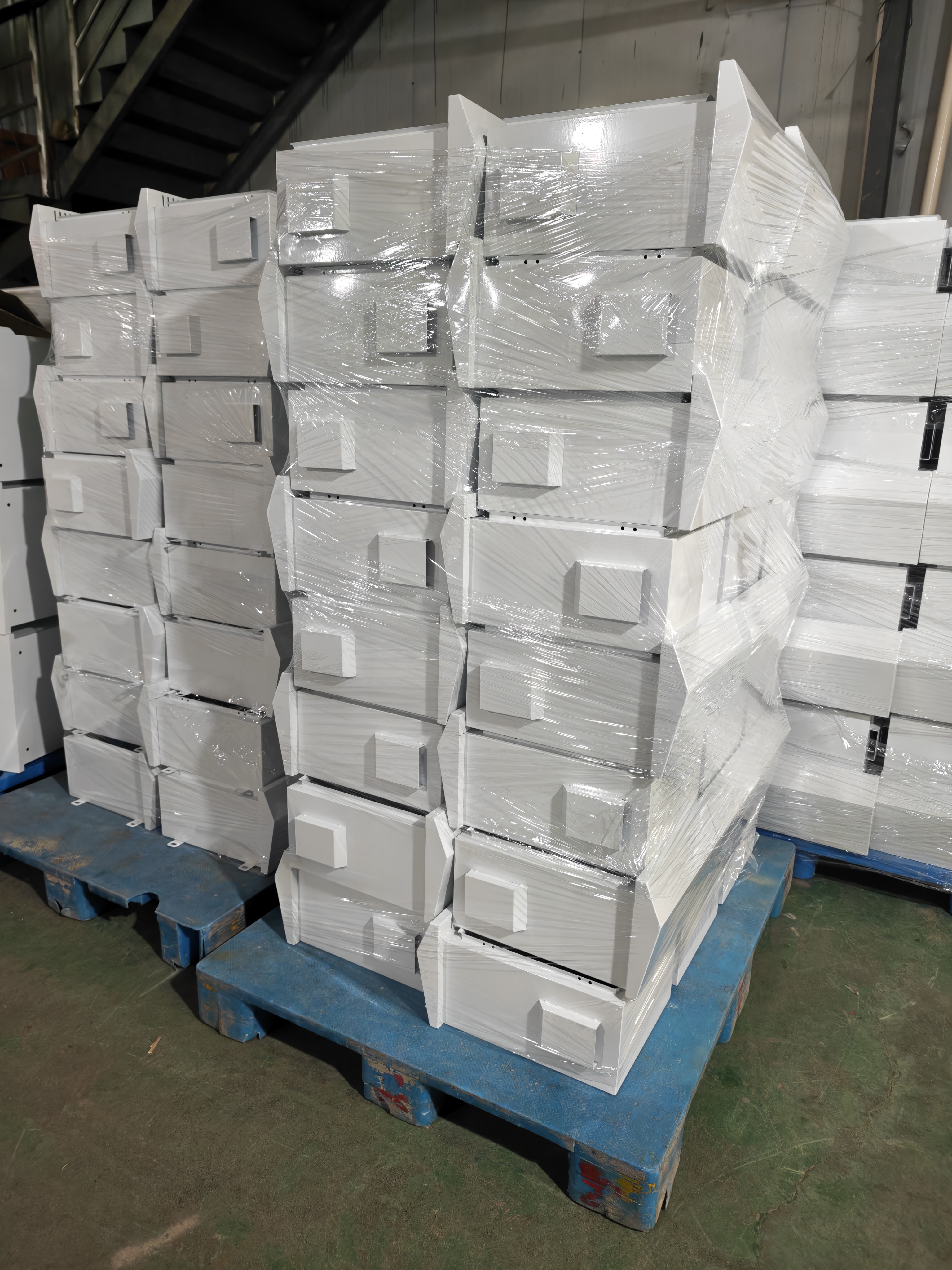
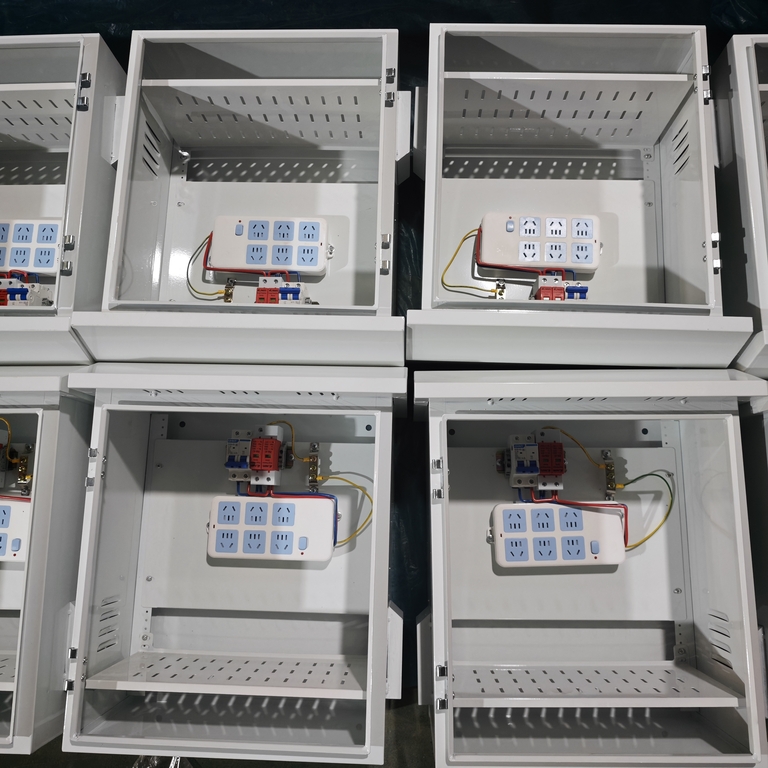
The two photos come from the bending area, before powder coating. Stainless steel enclosures stand in columns on the floor, each box offset from the one below. Nothing about the arrangement is casual. Stainless steel enclosure stacking follows three rules on the floor: no mixed grades, no load on a folded edge, no scratch on a brushed face.

A painted enclosure hides handling damage until someone looks closely. A brushed stainless face does not. A scratch across the grain cannot be polished out at the corner; the whole face is re-brushed or scrapped. Stainless steel enclosure stacking is handled differently from painted work, and the difference starts before any box leaves the bender.

Rule One: No Mixed Grades on One Stack

Carbon steel and stainless steel never share a stack or a trolley. Steel particles from a mild steel sheet embed in the softer stainless surface and stay through washing. After a month at sea the particles rust, and the buyer opens a crate to find brown spots on material sold as stainless.

The floor is split into marked bays. Stainless steel enclosures wait in the stainless bay, on timber or plastic separators, with the grade written on the traveller card. Stainless steel enclosure stacking begins with keeping the two materials apart, not with how high the pile goes.

Rule Two: No Load on a Folded Edge

A folded edge looks like the strongest line on a box. Under a stack the fold is the first place to give. The fold carries the weight of every box above, and once the fold flattens the door no longer sits in the frame. Stack height is set by panel thickness and box size, not by free floor space.

Boxes are cross-stacked, each one turned ninety degrees from the box below. Cross-stacking lets air move between panels after washing, makes a count possible from the aisle, and stops two flat faces from sealing into a vacuum needing a hand to break. Stainless steel enclosure stacking depends on the offset as much as on the height.

Rule Three: No Scratch on a Brushed Face

Every corner gets a protector, and brushed faces are paired face to face or back to back so a bare edge never touches a grain. Stainless steel enclosure stacking is judged at the end by the surface, and the surface is the one thing impossible to repair in place.

Lifting follows the same logic. Slings are flat woven, 50 mm or wider, never wire rope. A wire rope leaves a line no amount of cleaning removes, and a sling hooked under a folded edge does the damage Rule Two exists to prevent.

Stainless steel enclosure stacking outdoors adds one more variable: salt. Stainless steel resists rust through a passive film, and chlorides break the film down at scratches and in standing water. Enclosures stacked near a coast wait on timber keeping the base off the ground, with water draining away instead of pooling in a fold.

What the Floor Checks Before Dispatch

Three failure modes drive the floor routine.

Risk What the floor does What happens if missed
Carbon steel and stainless on one stack Separate bays, timber or plastic separators, grade on the traveller card Brown spots after sea freight; the buyer sees rusty stainless
Stack height past what the sheet stiffness allows Height fixed by panel thickness and box size at the first stack Folded edges flatten, doors stop sitting in the frame
Brushed face against a bare edge or a wire rope Corner protectors, interleaving paper, flat slings 50 mm or wider The face is re-brushed or the box is scrapped

At dispatch the count is taken from the stack, the top box and one from the middle are checked under light at a low angle, and the stack is photographed as loaded. A low-angle light shows a scratch a straight look misses. The photo settles later arguments about where a mark came from. Stainless steel enclosure stacking is recorded in three things: a count, a grade on the card, and a photo of the load.

Ouyue Electric bends, welds and finishes stainless steel enclosures in house, in 304 and 316 grades on request, with protection ratings available in IP54, IP55, IP56 and IP65. Orders start at 10 units, and drawings are worked to customer specification.

Related News
Leave me a message
X
We use cookies to offer you a better browsing experience, analyze site traffic and personalize content. By using this site, you agree to our use of cookies. Privacy Policy
RejectAccept