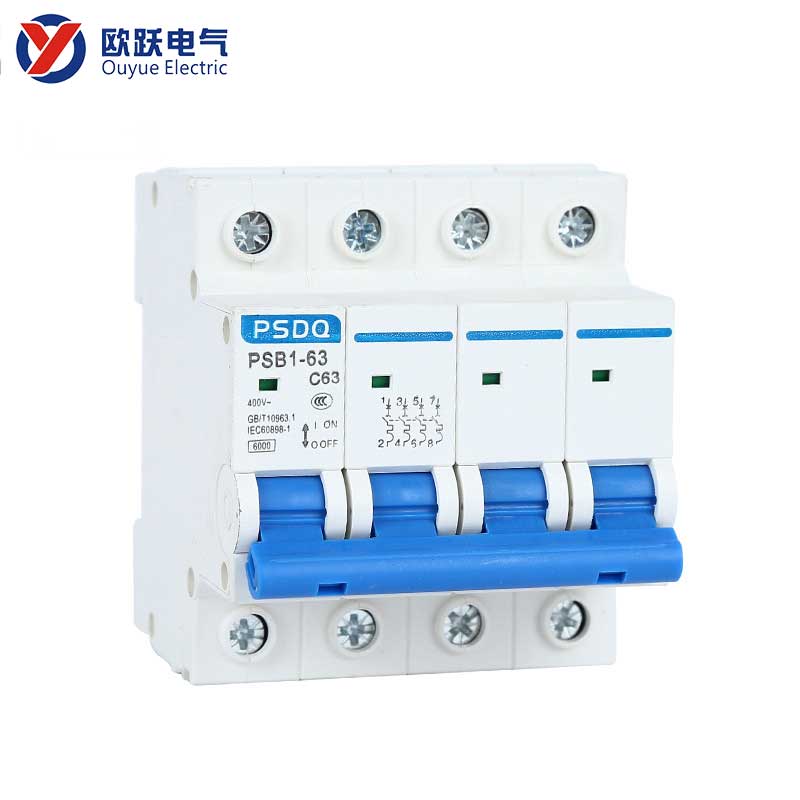
A Small Circuit Breaker 4P plays an important role in protecting three-phase, four-wire electrical distribution systems. By providing coordinated switching of three phase conductors and the neutral conductor, it helps disconnect a circuit when an overload or short-circuit fault occurs. With rated currents from 10A to 63A, a rated voltage of 400V AC, and a standard breaking capacity of 6kA, this miniature circuit breaker is suitable for various commercial, residential, and industrial distribution applications. At Ouyue, we consider the correct selection of circuit protection components an important part of designing reliable metal distribution boxes and electrical enclosures.
A four-pole miniature circuit breaker is designed for three-phase four-wire power distribution, where coordinated disconnection of L1, L2, L3, and N is required. This article explains how a Small Circuit Breaker 4P handles overload and short-circuit faults, why its neutral pole matters, and how rated current and breaking capacity affect product selection. We also discuss its practical use in industrial control cabinets, commercial electrical panels, and three-phase residential installations.
In a three-phase four-wire electrical system, the power supply consists of three phase conductors (L1, L2, and L3) and one neutral conductor (N). These conductors work together to supply three-phase equipment and single-phase loads. If an electrical fault occurs, the circuit protection device must respond quickly enough to prevent excessive current from damaging cables and connected equipment.
A Small Circuit Breaker 4P uses a mechanically linked four-pole switching structure. When the protective mechanism detects an overload or short circuit on a protected phase, it trips and disconnects the associated circuit. The linked contacts open together, including the neutral pole, according to the device's design. This provides coordinated isolation of all four conductors.
An overload occurs when a circuit carries more current than its rated capacity for an extended period. For example, a small workshop may operate several motors, ventilation fans, and auxiliary electrical devices simultaneously. If the combined load exceeds the circuit's permissible current, the thermal release mechanism responds to the sustained overcurrent and trips the breaker.
Choosing the correct rated current is important. A breaker with an excessively high rating may fail to provide adequate protection for the connected cable, while an undersized breaker may trip frequently during normal operation. We recommend evaluating the actual load current, cable ampacity, and installation conditions before selecting a model.
A short circuit can produce a sudden and extremely high current. The magnetic release mechanism in a conventional thermal-magnetic miniature circuit breaker responds rapidly to this fault and opens the contacts to interrupt the current.
Breaking capacity is another important consideration. A 6kA model is suitable only where the calculated prospective short-circuit current at the installation point does not exceed its rated breaking capacity. For installations with higher fault levels, a suitable 10kA version or another appropriately rated protective device may be required.
The main difference between a three-pole and four-pole circuit breaker is the treatment of the neutral conductor. A 3P breaker switches the three phase conductors, while a 4P breaker also switches the neutral conductor through a mechanically linked contact.
This distinction matters in three-phase four-wire systems where single-phase loads share the same distribution network. Disconnecting all four conductors can provide a more complete electrical isolation arrangement when the circuit design requires neutral switching, such as certain supply configurations and maintenance conditions.
| Comparison | 3P Circuit Breaker | 4P Circuit Breaker |
|---|---|---|
| Number of poles | 3 | 4 |
| Phase conductors | L1, L2, L3 | L1, L2, L3 |
| Neutral switching | Normally not switched | Neutral is switched |
| Typical application | Three-phase three-wire systems | Three-phase four-wire systems |
| Isolation arrangement | Disconnects three phases | Disconnects three phases and neutral |
One technical detail deserves attention: a four-pole design does not automatically mean that all four poles have independent overcurrent protection. Some 4P miniature circuit breakers use three protected poles and a switched neutral pole, while other designs have different neutral protection arrangements. We always recommend checking the product's wiring diagram and technical documentation before installation.
When evaluating a Small Circuit Breaker 4P, we focus on several parameters that directly affect compatibility with the electrical distribution system. The following specifications describe the product configuration provided by Ouyue.
| Parameter | Specification |
|---|---|
| Product Name | Small Circuit Breaker 4P |
| Number of Poles | 4P |
| Rated Current | 10A, 16A, 20A, 25A, 32A, 40A, 50A, 63A |
| Rated Voltage | 400V AC |
| Frequency | 50/60Hz |
| Breaking Capacity | Typically 6kA; 10kA options available |
| Mounting Method | Standard 35mm DIN Rail |
| Certification | CE |
These ratings cover a range of common low-voltage distribution requirements. However, rated current alone does not determine whether a circuit breaker is suitable. The installation voltage, prospective fault current, ambient temperature, conductor size, and load characteristics should also be considered.
In practical electrical distribution projects, we find that selecting a breaker based only on the equipment's rated power can lead to problems. A more reliable selection process considers the entire circuit, from the incoming supply to the downstream load.
The available current ratings include 10A, 16A, 20A, 25A, 32A, 40A, 50A, and 63A. For example, a small three-phase ventilation system may require a different rating from a workshop distribution branch supplying multiple machines.
The selected breaker must coordinate with the cable's current-carrying capacity and the load's operating characteristics. Motor starting current should also be considered to avoid unnecessary tripping.
Breaking capacity indicates the maximum prospective short-circuit current that the breaker can safely interrupt under its specified test conditions. A 6kA rating is common in many small distribution applications, but it should not be treated as universally suitable.
Where the available fault current is higher, a 10kA option may be more appropriate. The final decision should be based on a short-circuit calculation or a verified assessment of the installation point.
Not every three-phase installation requires a switched neutral. The choice between 3P and 4P depends on the earthing arrangement, supply configuration, local electrical regulations, and the system's operating requirements. In installations with multiple power sources, neutral switching must be coordinated carefully to prevent unsafe switching conditions.
A standard 35mm DIN rail mounting arrangement makes this type of miniature circuit breaker convenient for modular distribution panels. Before installation, check the enclosure's internal dimensions, available rail space, terminal clearance, and cable bending radius.
The compact modular structure and four-pole switching arrangement make this circuit breaker useful in several low-voltage distribution environments.
Small shops, offices, and commercial facilities often use three-phase incoming supplies to distribute electricity to lighting, air-conditioning, and other equipment. A 4P miniature circuit breaker can serve as an incoming or branch protective device where coordinated neutral disconnection is required by the system design.
Small industrial control cabinets may contain pumps, ventilation fans, auxiliary motors, and control equipment. Individual branch protection helps isolate a faulty circuit without unnecessarily interrupting other parts of the installation, provided the protection arrangement is properly coordinated.
Some villas and larger residential properties use three-phase four-wire power distribution to supply different groups of single-phase loads and three-phase appliances. A 4P breaker can be used at an appropriate distribution point when the electrical design requires all-pole switching.
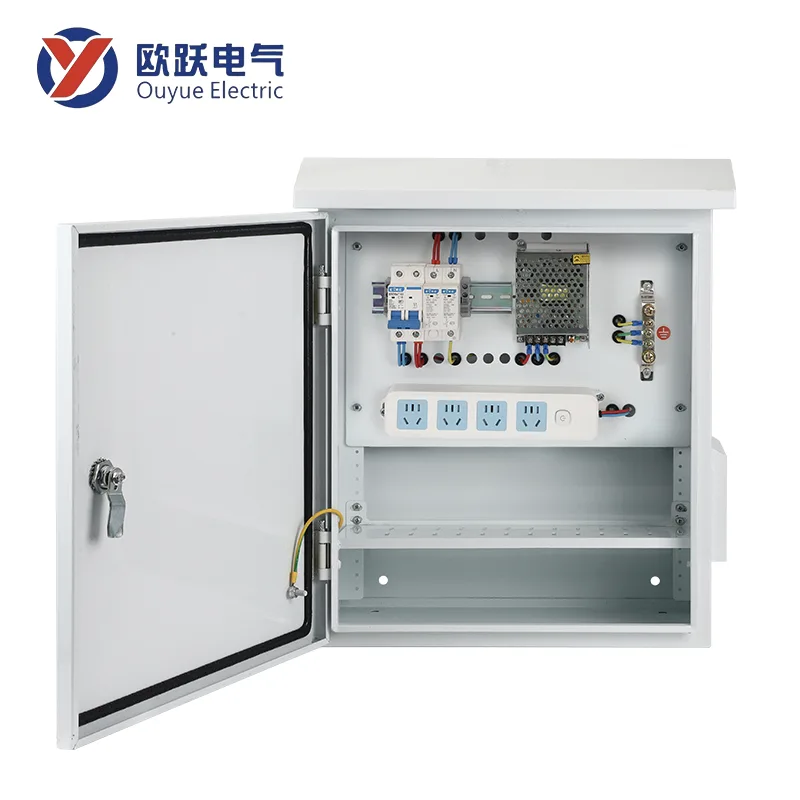
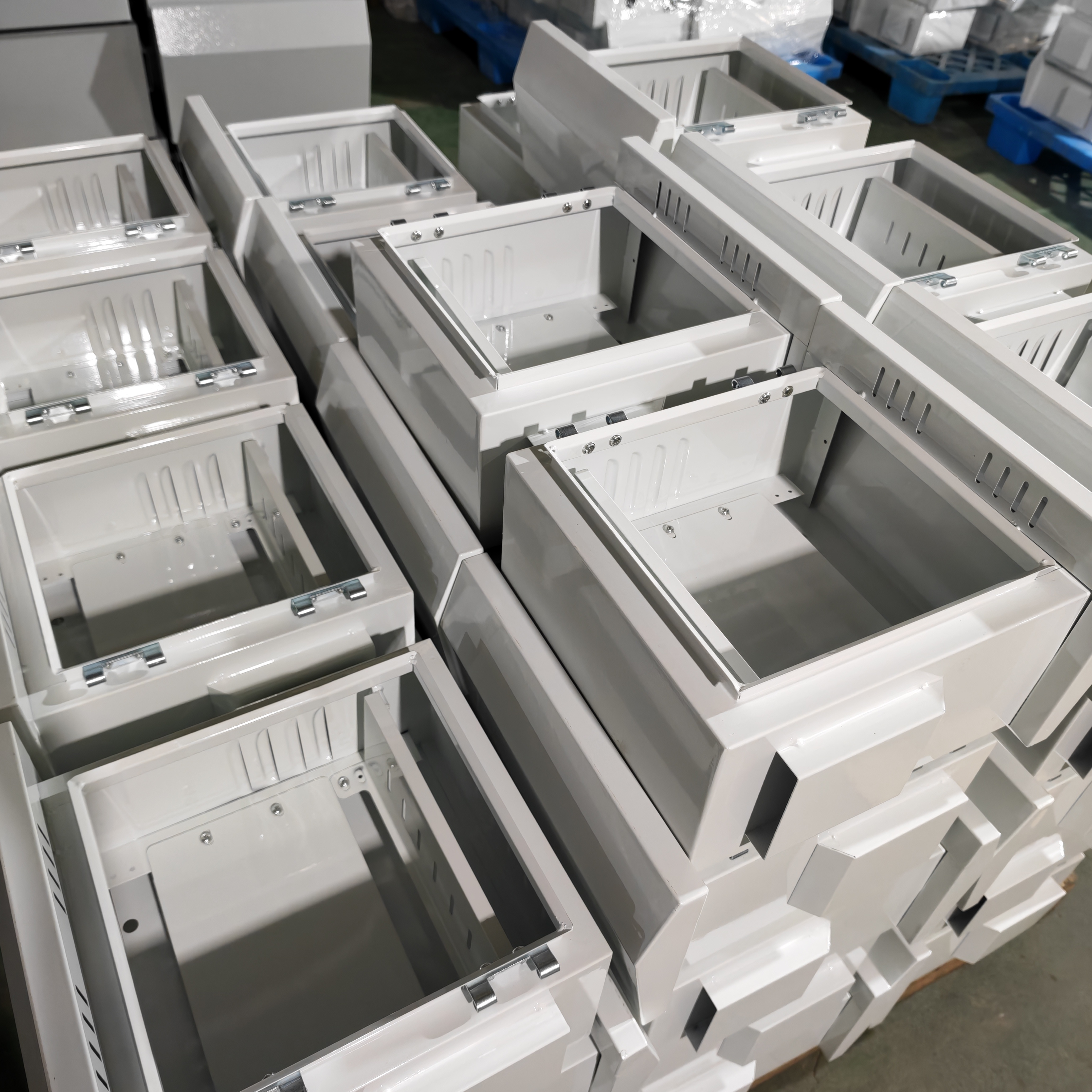
A circuit breaker does not operate independently of the enclosure around it. Its installation position, wiring arrangement, heat dissipation, and available internal space all affect the overall performance of an electrical distribution assembly.
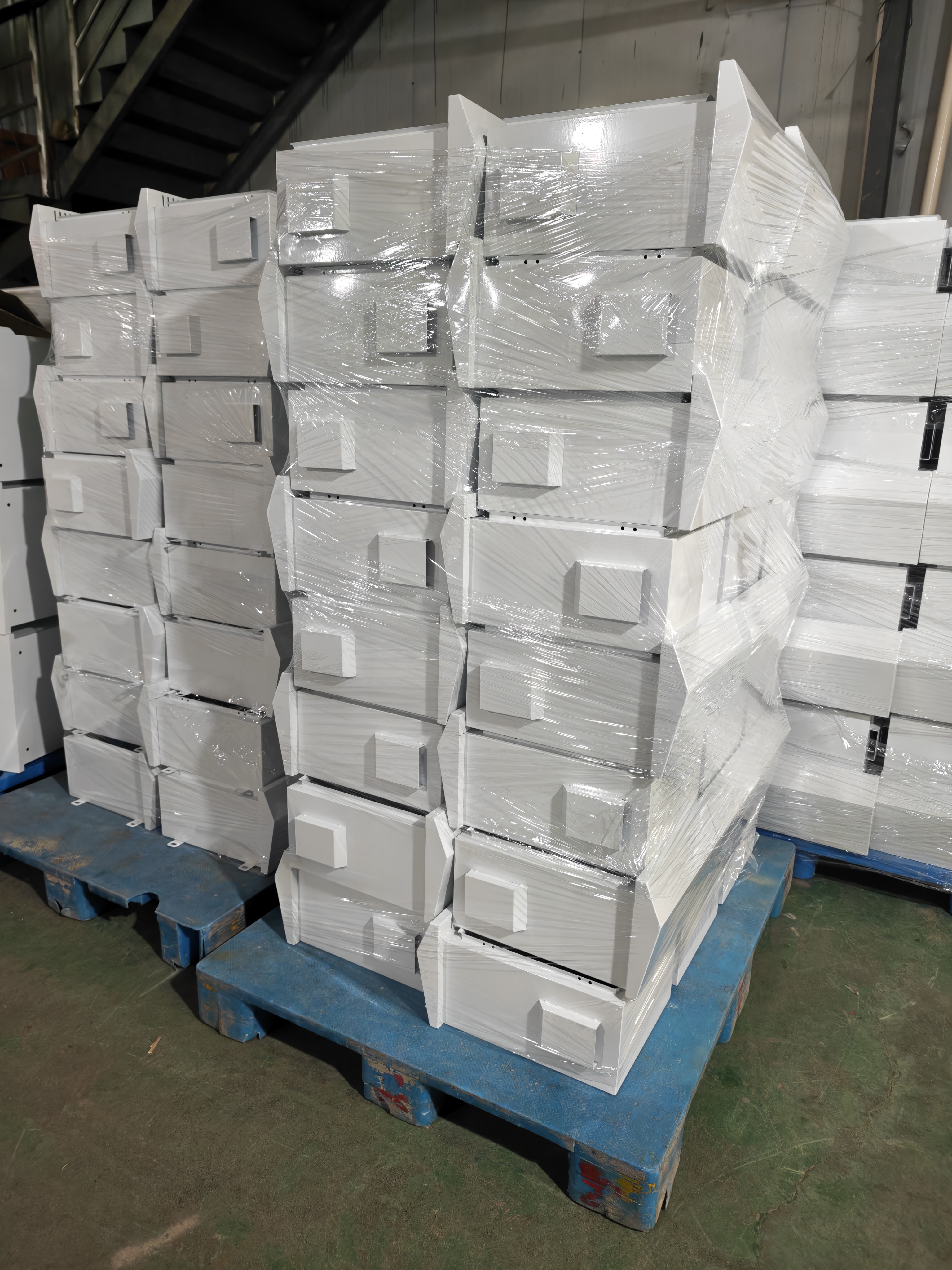
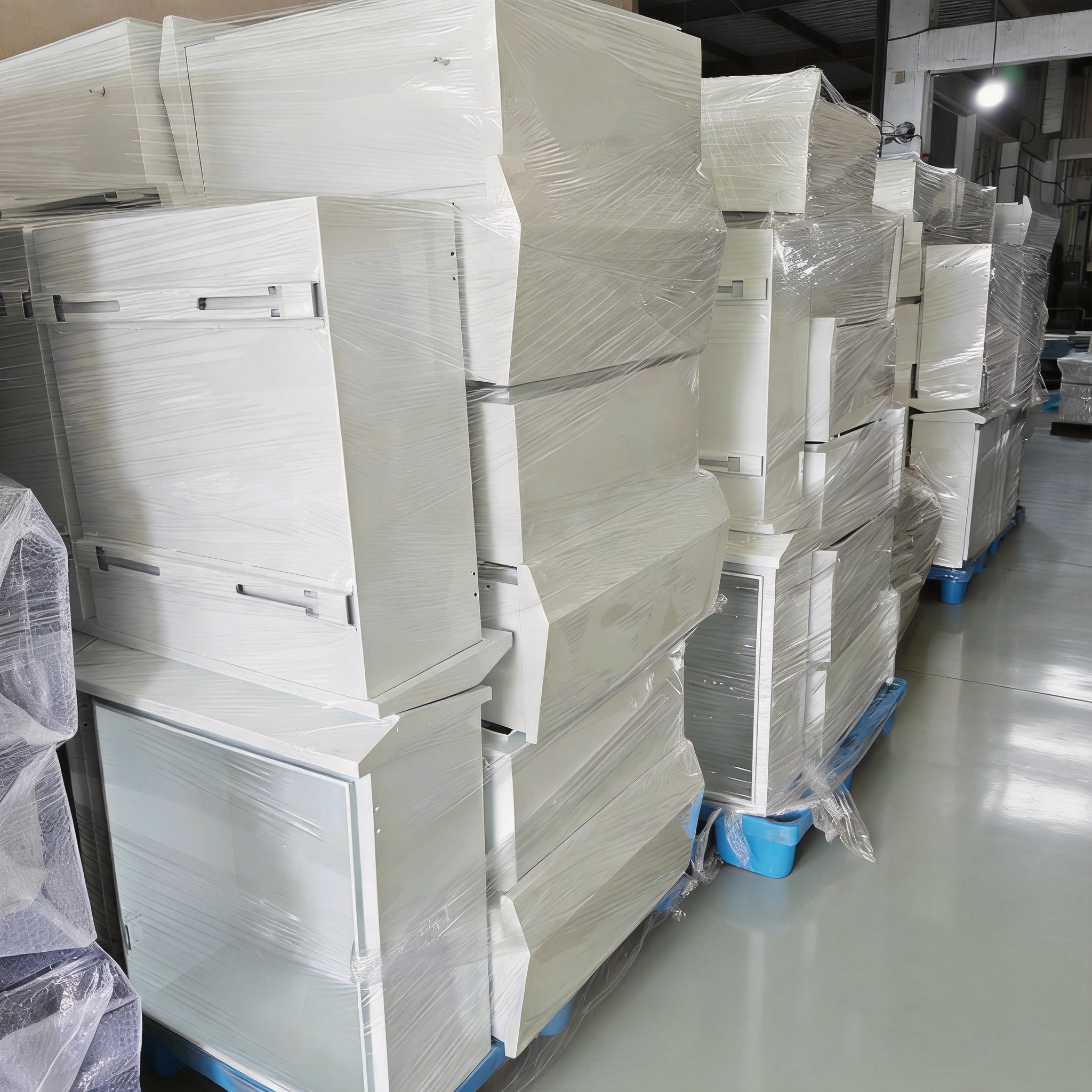
At Ouyue, Zhejiang Ouyue Electric Co., Ltd., we have more than ten years of production experience in metal box manufacturing. Our product range includes metal distribution boxes, monitoring boxes, stainless steel boxes, customized boxes, construction boxes, electrical protection boxes, and industrial enclosures.
When developing a customized metal distribution box, we can adjust dimensions, material selection, sheet thickness, and packaging according to project requirements. For customers integrating miniature circuit breakers into electrical cabinets, it is important to confirm the number of poles, component dimensions, DIN rail arrangement, cable entry positions, and required installation clearances before finalizing the enclosure design.
Our experience in metal box production helps us understand why enclosure specifications should be considered alongside electrical component selection. A well-planned enclosure makes installation and maintenance more practical while providing suitable space for the selected distribution components.
Explore our Metal Distribution Boxes to learn more about our available enclosure products and customization options.
Its main function is to provide overload and short-circuit protection for the designated protected conductors while enabling coordinated switching of three phase conductors and the neutral conductor. It is commonly used in three-phase four-wire distribution systems.
Not in every installation. A 4P breaker can be used in some applications where a 3P breaker would otherwise be considered, but the neutral switching arrangement must be compatible with the earthing system and circuit design. Neutral conductors should never be switched independently of the phases in a way that creates an unsafe operating condition.
The available rated current options are 10A, 16A, 20A, 25A, 32A, 40A, 50A, and 63A. The appropriate rating depends on the load current, cable capacity, installation conditions, and applicable electrical requirements.
The difference is the maximum short-circuit current the circuit breaker is rated to interrupt under specified conditions. A 10kA breaker has a higher rated breaking capacity than a 6kA model. Selection should be based on the prospective short-circuit current at the installation point, not simply on choosing the higher number.
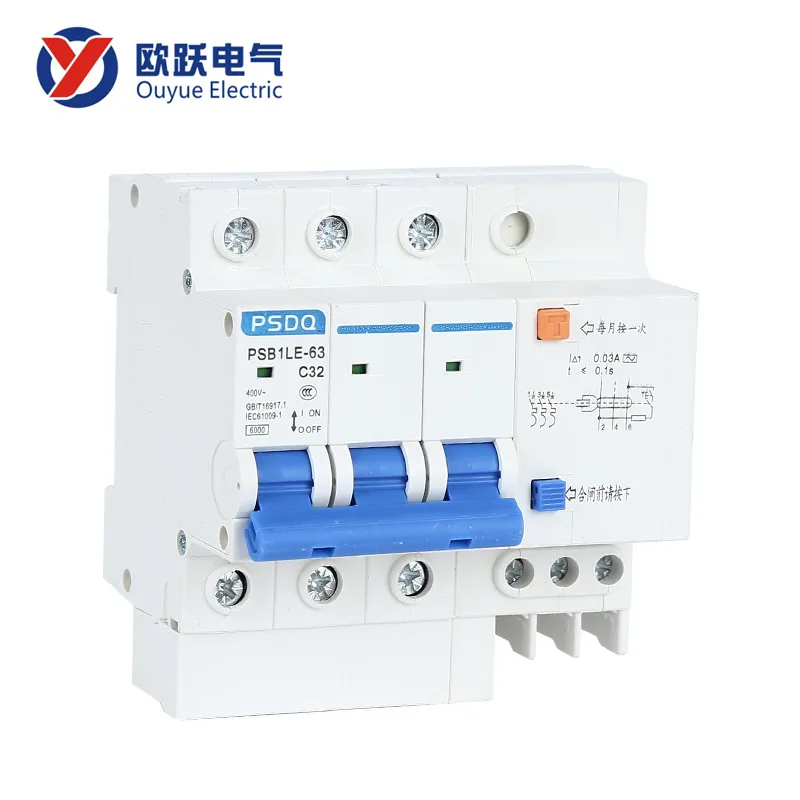
No. A standard miniature circuit breaker provides overcurrent protection, including overload and short-circuit protection. It does not automatically provide residual-current or earth-leakage protection. Where leakage protection is required, an appropriate RCD or RCBO should be selected according to the electrical system design.
Yes. Ouyue provides customization of metal boxes according to project requirements, including enclosure dimensions, material, sheet thickness, and packaging. For circuit breaker installations, customers can provide component dimensions, layout drawings, or samples so that the enclosure configuration can be evaluated before production.
A Small Circuit Breaker 4P provides a practical solution for three-phase four-wire distribution systems that require coordinated switching and appropriate overcurrent protection. Its rated current, breaking capacity, neutral arrangement, and installation conditions all need to match the actual electrical application.
At Ouyue, we understand that reliable electrical distribution involves more than selecting individual components. Proper enclosure dimensions, internal layouts, and customization details also matter. With our experience in metal distribution box manufacturing, we can support different enclosure requirements for commercial, residential, and industrial electrical projects.